

How to Change the Owner of an LLC: Step-by-Step Guide
What if you could seamlessly hand over your business to new ownership without losing everything you’ve built? Many LLC owners assume that changing ownership means dissolving the company and starting from scratch. That’s simply not true.
Whether you’re selling your business, bringing on new partners, or planning for retirement, transferring LLC ownership is straightforward when done correctly. The challenge is knowing the exact steps to avoid tax problems, state compliance issues, or legal disputes.
In this guide, we’ll walk you through the LLC ownership transfer process, required forms, and how DoMyLLC’s professional services can protect you from costly mistakes.

Key Takeaways
- You can change the owner of an LLC without dissolving the business. The LLC remains intact while ownership transfers to new members.
- LLC ownership transfers must follow state law and the operating agreement. Every state has different requirements.
- Most ownership changes require updated documents and state filings. You’ll need transfer agreements, updated records, and state forms.
- Professional agent helps you stay compliant and avoid tax errors, while giving you the support and oversight needed to keep your business on track.
Can You Change the Owner of an LLC?
Yes, you can change the owner of an LLC. Ownership can be transferred in both single‑member and multi‑member LLCs. A single‑member LLC can bring in new owners, sell a portion of ownership, or transfer complete ownership. Multi‑member LLCs can add members, remove members, or adjust ownership percentages among existing members.
The LLC structure typically makes ownership changes simpler than in corporations, which often face stricter rules around stock transfers. LLCs operate using membership interests rather than stock shares, giving members more control over how interests are transferred.
However, requirements vary by state and by operating agreement. Some states require filings or approvals when ownership changes, while others only require internal record updates. Your operating agreement usually spells out the exact process for transferring ownership, including whether existing members must approve new owners.
Ownership changes are not always private and may require state filings. Many states require you to file Articles of Amendment or an updated Statement of Information when membership changes, making the transfer part of the public record.
Common Reasons for Transferring Ownership of an LLC
LLC ownership often changes when an owner wants to exit, retire, or bring in new capital. Owners may sell all of their interest to leave the business or transfer only a portion while staying involved.
Transfers also occur when the membership group changes. New members may be added for their investment or expertise, and departing members are frequently bought out if they no longer wish to participate.
Other common triggers include partner buyouts, inheritance, and internal restructuring. Remaining owners might purchase a departing member’s share, family members may receive interests after an owner’s death, or percentages may be adjusted to match updated roles and contributions.

How to Transfer LLC Ownership: Step-by-Step Guide
Transferring LLC ownership is typically a multi‑step process that must follow your operating agreement and state law. The sequence below keeps your original quotes while tightening and clarifying the steps.
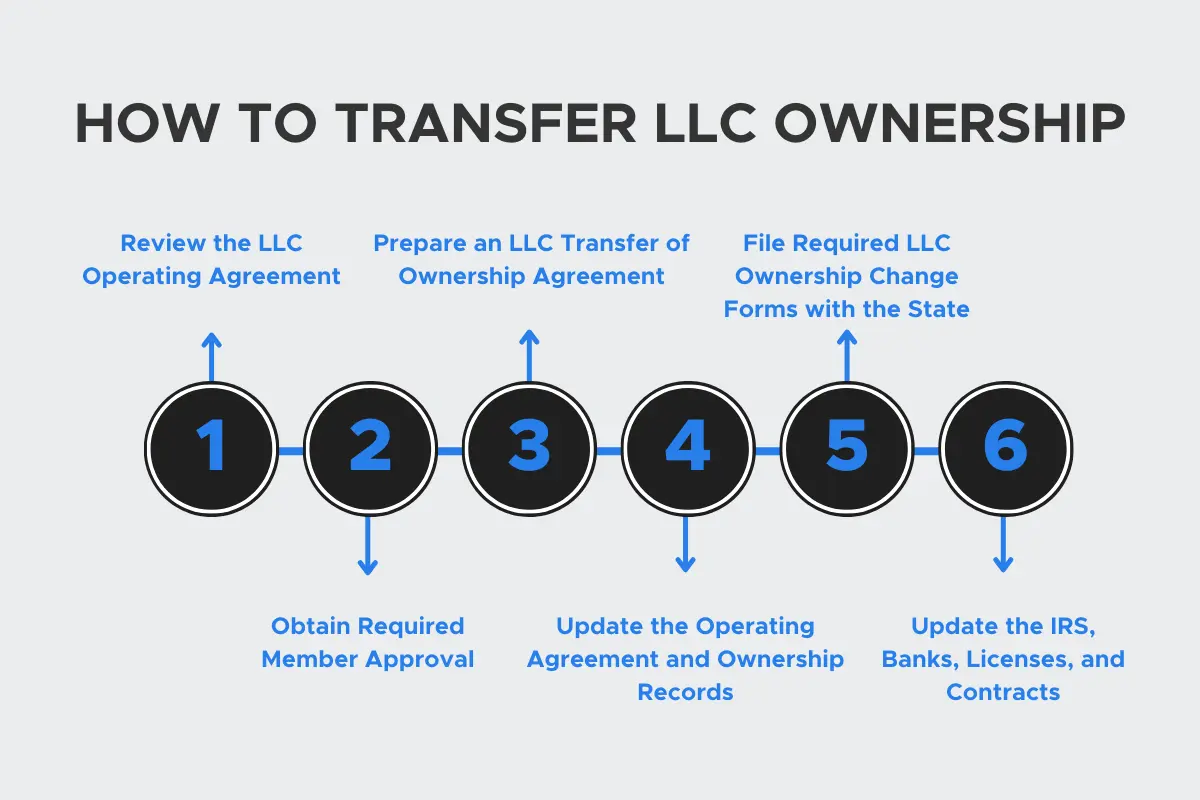
Step 1: Review the LLC Operating Agreement
Check your operating agreement for rules on ownership transfers, including required member approval, any rights of first refusal, and limits on transfers. If it is missing or silent, follow your state’s default LLC laws.
Step 2: Obtain Required Member Approval
Obtain any member approvals required by your operating agreement or state law, whether unanimous, majority, or a specific ownership percentage, and document that approval in writing (for example, with resolutions or written consents).
Step 3: Prepare an LLC Transfer of Ownership Agreement
Prepare a written transfer (or assignment of membership interest) agreement that identifies the parties, states the ownership percentage being transferred, the price or other consideration, the effective date, and any conditions or restrictions on the transfer.
Step 4: Update the Operating Agreement and Ownership Records
Update the operating agreement and internal records to show the new ownership structure, including current members, their percentages, and any management or voting rights, and note the transfer date and new ownership breakdown in your membership ledger.
Step 5: File Required LLC Ownership Change Forms with the State
Determine whether your state requires any filings to report changes in members or managers. Some states require Articles of Amendment when member information changes, while others require updated Statements of Information or Annual Reports, and a few may not require a filing solely because ownership changed. Failure to file required forms can lead to penalties or loss of good standing.
Step 6: Update the IRS, Banks, Licenses, and Contracts
Update tax and business records affected by the ownership change. According to the IRS, “A change in ownership or business structure may require a new employer identification number (EIN), depending on the circumstances”. In some cases, such as certain changes in tax classification or ownership structure, you may need a new EIN. Also notify your business bank, update licenses or permits that list owners or responsible parties, revise contracts that reference specific owners, and review insurance policies.
According to the U.S. Small Business Administration, “Any changes to a business’s ownership or structure may require updates to licenses, permits, and registrations, depending on state and local requirements”. Operating with outdated licenses or records can increase the risk of fines or legal issues.
LLC Transfer of Ownership Forms You May Need
The forms needed for an LLC ownership change depend on your state and what is being updated. Articles of Amendment (or similar amendments) often update information from your formation documents, while Statements of Information or annual reports in some states serve as the public record for current member or manager details.
An Assignment of Membership Interest (or similar agreement) is commonly used to transfer an ownership interest and should identify the parties, the interest being transferred, the price or other consideration, and include signatures. Member consent or a formal resolution is usually used to document required approval, and missing or incomplete approval can leave a transfer open to challenge.
State‑specific filing rules vary. For example, Delaware LLCs generally meet ongoing obligations through an annual franchise tax payment and do not routinely list members in public reports, while Florida and Nevada use annual or periodic reports to keep member or manager information current and expect those reports to be updated when certain details change. Because requirements differ, it is important to check your own state’s rules before filing—or deciding not to file—any forms.
You can handle these filings yourself, but many owners prefer to use a professional service, such as DoMyLLC, to help ensure the paperwork is accurate, deadlines are met, and state‑specific requirements are properly satisfied.
Changing Members in an LLC
In a single‑member LLC, changes usually mean the sole owner either sells their entire interest or adds another owner, which typically shifts the default tax classification to a partnership and can create new tax filing obligations and sometimes a new EIN.
In a multi‑member LLC, adding or removing members is generally governed by the operating agreement and usually involves approval from existing members, setting capital contributions and ownership percentages, and updating the agreement and ownership records; removals are often handled through a buyout where the departing member’s interest is purchased and the remaining members’ percentages adjust.
Changes in membership should be documented clearly, including both ownership percentages and management rights, because management control does not always match economic stakes (for example, member‑managed LLCs can give equal votes regardless of ownership share, while manager‑managed LLCs place day‑to‑day authority with designated managers).
Tax and Legal Considerations
Selling a membership interest can create capital gains or other taxable income for the seller when the amount received exceeds their outside basis, which generally reflects contributions made, the seller’s share of undistributed profits, and certain LLC debts. The seller must report the sale and pay any resulting tax, and the buyer typically starts with a basis roughly equal to what they paid for the interest (often adjusted for their share of liabilities).
EIN changes can also arise. When a single‑member LLC adds another member and becomes multi‑member, its default tax classification usually shifts to a partnership and a new EIN is often required, while a multi‑member LLC that stays multi‑member usually keeps the same EIN when interests change hands. Because these transfers mix state law, operating‑agreement rules, and complex tax effects, most meaningful deals benefit from professional guidance: an attorney can draft compliant transfer documents, and a tax professional can evaluate gain or loss, minimize tax exposure, and advise on EIN needs.
Why Use a Professional Agent to Transfer LLC Ownership
Using a professional agent to transfer LLC ownership helps avoid costly mistakes and delays. They handle state‑specific forms, filings, and documentation correctly, reducing the risk of rejected submissions or future disputes over ownership and member rights—that’s where we can help by taking these details off your plate.
Instead of spending time learning requirements and fixing errors, you can rely on our experienced specialists to manage paperwork, track deadlines, and keep your LLC in good standing, so you can stay focused on running your business with confidence.
Frequently Asked Questions About Transferring LLC Ownership
Yes. In most cases you can change LLC ownership without dissolving the company, as long as you follow your state's rules and your operating agreement. The LLC continues as the same legal entity with new owners, so you generally do not need to shut it down and form a new business, which is a key advantage over a sole proprietorship.
Usually it takes anywhere from a few days to several weeks to transfer LLC ownership. States with online filing can process required documents in a few days, while paper-based states may take several weeks, and the internal steps (drafting agreements, getting approvals, updating records) can move as fast as the parties sign everything.
No. Not every state requires a public filing when LLC ownership changes. In some states you must file an amendment or update an information/annual report when members change; in others, you only update internal records. Always confirm the specific rule in your state before assuming a filing is or isn't required.
No, as long as the LLC remains compliant and properly documented. The LLC's limited liability protection continues regardless of who owns it. New owners receive the same protection previous owners enjoyed.
However, failing to document properly or letting the LLC fall out of good standing could jeopardize liability protection.
Most ownership changes require some written agreement, and many states require formal filing. At minimum, you need a written transfer agreement between parties to document the transaction.
Whether you need to file documents with the state depends on your state's requirements. But even in states without filing requirements, create written documentation.
When an LLC member dies, the result depends on the operating agreement and state law. Many agreements include buy‑sell provisions that say whether the interest passes to heirs or must be bought out by the remaining members, and how it will be valued. If there is no clear buy‑sell language, state default rules control, which can lead to legal complications and disputes over how the deceased member's share is handled.
Yes, transferring partial ownership is completely allowed in both single member LLC and multi member LLC structures. You can transfer partial interest while retaining the rest of your ownership stake. However, transferring partial interest requires the same documentation as a full transfer—including an amended operating agreement showing new ownership percentages, member consent from other LLC members, and potentially filing an ownership form with your state agency responsible for business registrations. Partial and full transfers both require careful attention to tax consequences and filing fees.
Yes. When you transfer LLC ownership, you should notify your bank and any other financial institutions. They usually require updated documents (such as an amended operating agreement, proof of the transfer, and ID for new owners) before changing signers or granting account access. Other parties like vendors, insurers, and lenders whose contracts reference owners may also need notice and updated paperwork.
Yes. You should consult legal and tax professionals before transferring LLC ownership. A business attorney can make sure your documents meet state requirements and are properly drafted, while a tax professional can explain the tax consequences, reporting obligations, and ways to minimize liability. The cost of advice is usually far less than fixing problems caused by an improperly structured or documented transfer.
A foreign LLC operates in a state different from where it was formed, which adds complexity to transferring membership interests. Foreign LLCs must comply with both their formation state's legal requirements and the foreign state's regulations where they're registered. This often means filing ownership forms with multiple state agencies, paying filing fees in multiple jurisdictions, and ensuring the ownership structure meets federal regulations and each state's specific provisions. Parties involved in foreign LLC transfers should work with legal counsel familiar with multi-state compliance to prevent legal complications and ensure the transfer is legally recognized in all relevant jurisdictions.
Final Thoughts on Transferring Ownership of an LLC
Transferring LLC ownership doesn’t have to be complicated. The real challenge is navigating state-specific requirements and avoiding costly mistakes that could jeopardize your business.
We handle everything from transfer agreements and state filings to operating agreement updates and ongoing compliance. Our registered agent services help to keep you on track with critical deadlines.
Contact DoMyLLC today to discuss your ownership transfer with transparent pricing and expert support.
Disclaimer: This content is intended for general educational and informational purposes only and does not constitute legal, tax, or accounting advice. Every effort is made to keep the information current and accurate; however, laws, regulations, and guidance can change, and no representation or warranty is given that the content is complete, up to date, or suitable for any particular situation. You should not rely on this material as a substitute for advice from a qualified professional who can consider your specific facts and objectives before you make decisions or take action.