

You built something real. A business, a brand, a livelihood. Then life got complicated. Maybe you missed a filing deadline, fell behind on state taxes, or simply let things slide during a tough year. Now your California limited liability company (LLC) is suspended or dissolved, and you’re wondering if it’s too late to bring it back. The good news? In most cases, you can reinstate your LLC in California without starting from scratch.
At DoMyLLC, we help business owners navigate the state reinstatement process every day. This guide walks you through exactly how to do it, step by step.
Key Takeaways
- California LLCs can be suspended by the Franchise Tax Board (FTB) or the California Secretary of State (SOS) for different reasons.
- Most suspended or dissolved LLCs can be reinstated by resolving outstanding taxes, fees, and filings.
- The reinstatement process involves multiple state agencies and can take several weeks.
- In many cases, it’s more cost-effective to reinstate an existing LLC than to form a new entity.
- You’ll need to obtain a Certificate of Revivor from the FTB and submit any missing state reinstatement forms to restore good standing.
- Staying on top of annual compliance is the best way to avoid going through this again.
What Does It Mean When an LLC Is Suspended or Dissolved in California?
California makes an important distinction between a suspended LLC and a dissolved (or canceled) one. The same compliance rules apply to both domestic limited liability companies and foreign LLCs registered in the state (though foreign entities are “forfeited” rather than “suspended”).
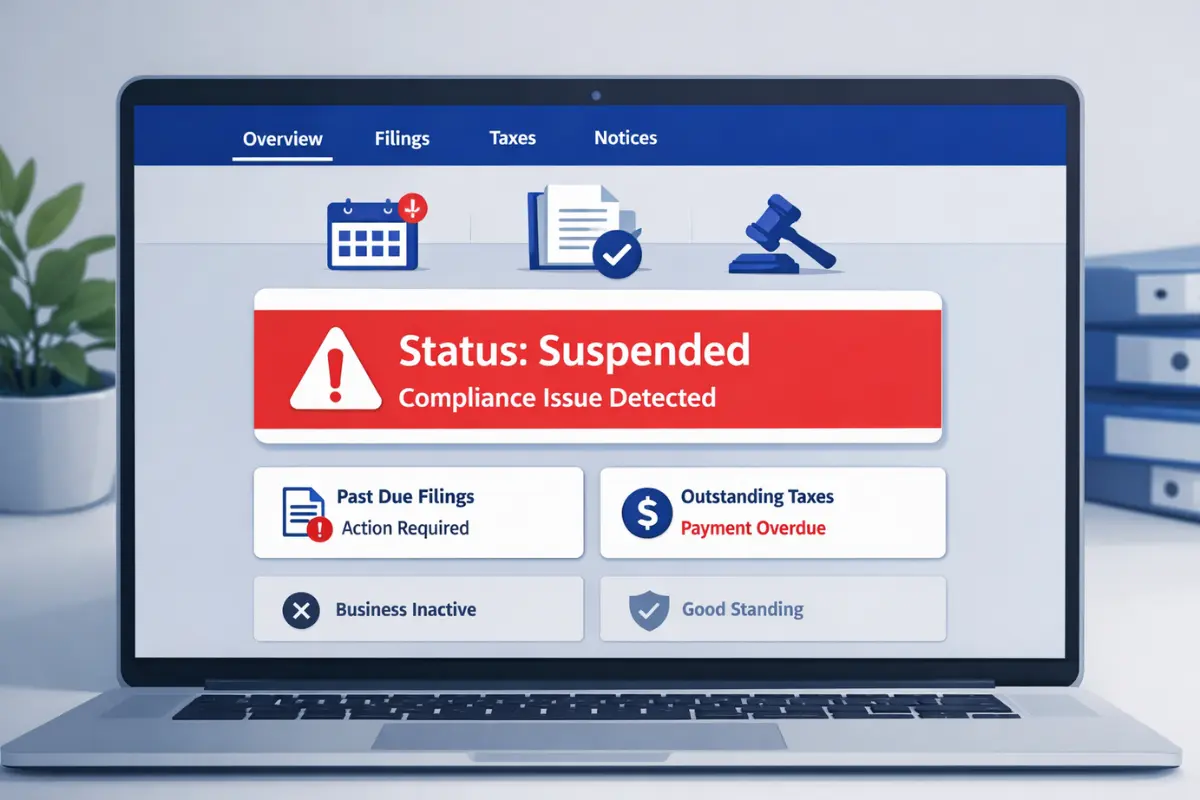
FTB Suspension happens when the California Franchise Tax Board acts against your LLC for failing to file required tax returns or pay franchise taxes. When suspended by the FTB, your LLC loses its rights, powers, and privileges to do business, bring lawsuits, or defend itself in court.
SOS Suspension or Forfeiture is handled by the California Secretary of State and typically results from missing required filings, with the Statement of Information being the most common culprit. This suspends the LLC’s powers but does not terminate its existence.
Administrative Dissolution/Cancelation is a final termination that occurs only after an LLC has been suspended by the FTB for 60 or more consecutive months. The FTB sends an intent notice, and if unresolved, the entity is permanently dissolved or canceled.
Common reasons California LLCs end up suspended or forfeited include:
- Missing one or more Statements of Information (non-filing with the SOS)
- Unpaid franchise taxes (California’s minimum is $800 per year)
- Failure to file required state or federal tax returns
- Compliance failures that cause the LLC to lose its active status with the FTB
According to the California Franchise Tax Board, a business entity that is suspended or forfeited must resolve all outstanding obligations before it can be revived. (California FTB)
Can You Reinstate an LLC in California?
Yes, in most situations. California law generally allows suspended LLCs to be revived and returned to active status, even after several years - as long as the LLC hasn’t been administratively dissolved.
Important limitation: If your LLC has been suspended by the Franchise Tax Board for 60 or more consecutive months, the FTB will issue a Pending Administrative Termination Notice. You then have only 60 days to resolve all outstanding obligations. Once administratively dissolved, reinstatement is no longer possible and you must form a new entity. The longer you wait, the more back taxes and penalties you’ll owe.
That said, there are some situations where starting fresh with a new entity may make more sense:
- The debt load from back taxes and penalties is too heavy to justify reinstatement
- Your original business name has since been taken and is no longer available (the Secretary of State will deny your revivor request if the name isn’t available)
- Your LLC has already been administratively dissolved after 60+ months of FTB suspension
- Significant structural changes to your business make a fresh start more practical
If you’re weighing your options, our breakdown of business reinstatement vs. renewal can help you think through the decision.
How to Reinstate an LLC in California (Step-by-Step)
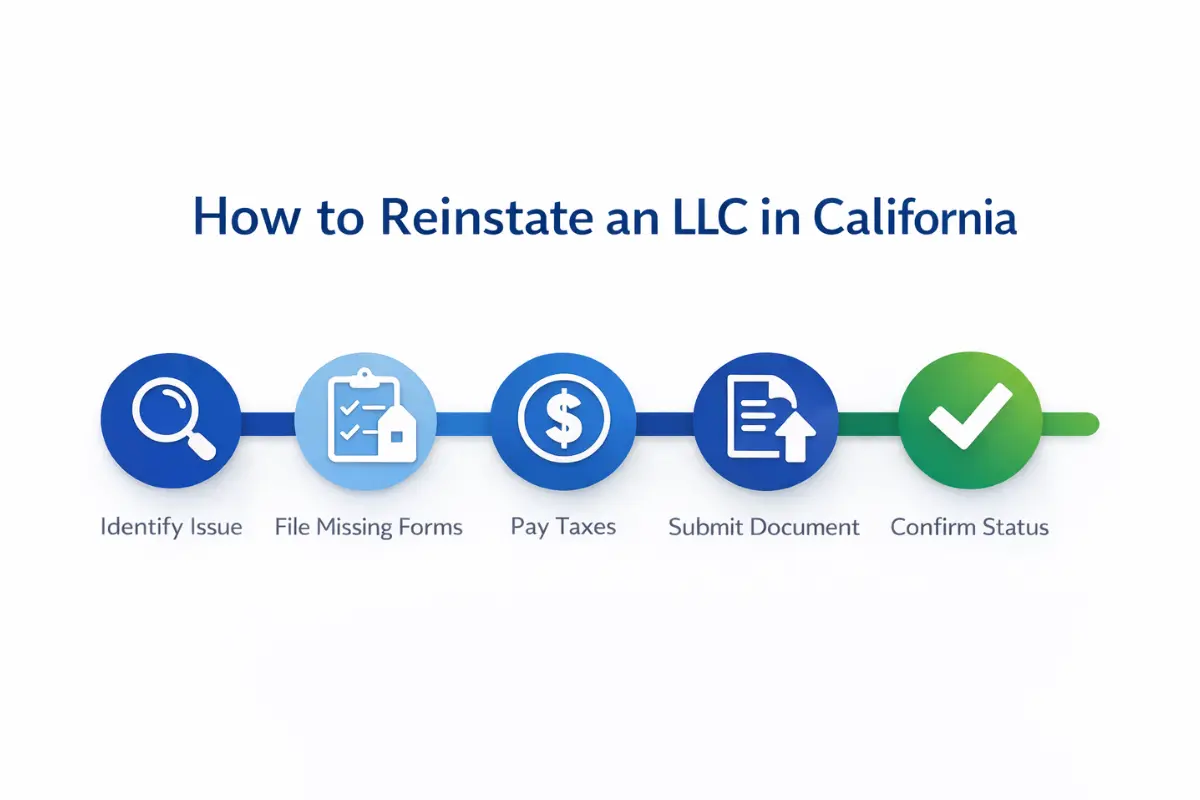
Here’s how to reinstate an LLC in California step by step. The process touches multiple agencies, so it’s important to tackle them in the right order. Each step has its own requirements, deadlines, and potential pitfalls, which is why many business owners choose to work with a professional service like DoMyLLC rather than navigate it alone.
Step 1: Identify Why Your LLC Was Suspended
Before you can fix the problem, you need to determine what caused it. Start by checking your LLC’s current status with the California Secretary of State at bizfileonline.sos.ca.gov. This will show whether your LLC is active, suspended, or forfeited, and may also reveal the suspension date.
You’ll also want to contact the Franchise Tax Board directly or log into your MyFTB account to check for outstanding tax liabilities. In some cases, the FTB may issue a proposed relief letter outlining what’s owed before proceeding with reinstatement. Your LLC may be suspended by one agency, both, or have a combination of issues to resolve.
Step 2: File Missing Statements of Information
If the SOS suspended your LLC, it’s likely due to a missing Statement of Information (Form LLC-12). You’ll need to file a new statement for each delinquent period and pay the associated fees. The filing fee for an LLC Statement of Information is $20 per filing.
Make sure each statement is accurate before submitting. Even if your LLC was only suspended by the FTB, confirm all SOS filings are current before proceeding - you don’t want to discover a second problem mid-process.
Step 3: Pay Outstanding Taxes and Penalties
This is often the biggest hurdle. You’ll need to pay all back franchise taxes, penalties, and interest owed to the California Franchise Tax Board. California’s minimum annual franchise tax is $800, so if your LLC has been inactive for three years without paying, you’re already looking at $2,400 in taxes alone, plus any penalties that have accumulated.
Once all balances are paid, you can request a tax clearance from the FTB to verify your account is in good standing. You may also need to file past-due tax returns for years the LLC had no revenue. Note that California charges a fee to the Corporate Fraud Compensation Fund as part of the revivor process. If your LLC previously held tax exempt status, that designation will need to be re-evaluated separately.
Step 4: Submit Application for Certificate of Revivor
After resolving your FTB obligations, you’ll submit FTB Form 3557 LLC (Application for Certificate of Revivor). You can file this online, or mail it directly to the FTB. Once satisfied that everything is in order, the FTB will issue a Certificate of Revivor. This is the official document that restores your LLC’s legal standing.
If your LLC was also suspended by the SOS, additional steps with that office will be required. In cases involving nonprofits, the California Attorney General’s office may also need to be notified.
Step 5: Confirm Your LLC Is Active
Once the Certificate of Revivor has been issued, verify that your LLC status has been updated in the California Secretary of State’s business search. It may take a few days for online records to reflect the change.
This is also a good time to set up reminders for future annual filings so you don’t end up back in the same situation. If you’d rather hand this off and not worry about it, DoMyLLC offers ongoing compliance support to keep your LLC in good standing year after year.
How Long Does It Take to Reinstate an LLC in California?
Processing times vary based on how you file and how backlogged the state agencies are. Generally speaking:
- FTB processing for a Certificate of Revivor typically takes 2 to 4 weeks
- Expedited processing options are available for an additional fee
- SOS filings are often processed within a few business days for online submissions
Keep in mind that the total timeline depends on how quickly you gather documents, pay outstanding balances, and submit everything correctly. Errors or missing information will cause delays. The whole process can take anywhere from a few weeks to a couple of months.
How Much Does It Cost to Reinstate an LLC in California?
The cost to reinstate an LLC in California varies based on how long your LLC has been suspended and what you owe. Here’s a general breakdown:
- Statement of Information filing fee: $20 per delinquent filing
- Annual franchise tax: $800 minimum per year owed
- FTB penalties and interest: Varies based on the amount owed and how long it’s been outstanding
- Tax clearance request: May involve additional fees depending on your account status
- Corporate Fraud Compensation Fund fee: A required fee assessed during the revivor process
- Certificate of Revivor application: No base filing fee from the FTB, but all outstanding balances must be paid first
- Expedited processing (optional): Additional fees apply for faster turnaround
- Other fees: Depending on your situation, SOS fees or other charges may also apply
California generally requires LLCs to pay an annual minimum franchise tax even if the business is not actively operating. (California FTB) Costs can range from a few hundred dollars for a recently suspended LLC to several thousand for one that’s been out of compliance for years.
Can You Reinstate a Dissolved, Suspended, or Cancelled LLC?
This is one of the most common questions we hear, and the answer depends on how your LLC lost its active status:
- Suspended LLC: Yes, reinstatement is typically possible by resolving the underlying issues with the FTB and/or SOS.
- Administratively dissolved LLC: Reinstatement may still be possible by filing overdue documents and paying outstanding fees, depending on timing.
- Voluntarily dissolved LLC: More complicated - reinstating may require forming a new LLC or consulting a business attorney.
- Cancelled or terminated LLC: If a Certificate of Cancellation was filed, reinstatement is likely not possible and you may need to start fresh.
Corporations, limited partnerships, and nonprofit corporations each follow slightly different reinstatement procedures in California. The steps in this guide focus on limited liability companies.
What Happens If You Don’t Reinstate Your LLC?
Ignoring a suspended or dissolved LLC comes with real consequences that get worse over time.
You lose liability protection. A suspended LLC can’t shield your personal assets from business debts or lawsuits. If someone sues while your LLC is suspended, you may be personally responsible for any damages. As the Small Business Administration notes, maintaining your business in good standing is essential to preserving liability protection and operating legally.
Your tax obligations don’t stop. Even while suspended, your LLC may still owe franchise taxes and be required to file returns. The IRS emphasizes that businesses must file required returns and pay taxes on time to avoid penalties and maintain compliance - and California’s Franchise Tax Board takes the same position.
Your business operations can grind to a halt. Signing contracts, opening bank accounts, or operating under a suspended LLC can expose you to legal problems. California courts can dismiss cases brought by a suspended LLC - you can’t even enforce a contract.
Your LLC name could be lost. The longer you wait, the more likely another business will claim a name similar to yours, and you’ll have no recourse while inactive.
Should You Reinstate Your LLC or Start a New One?
The right answer depends on your specific situation:
Reinstatement usually makes more sense when:
- You’ve built brand equity, client relationships, or contracts tied to the existing LLC
- Your bank accounts, EIN, and existing agreements are still tied to the old entity
- The back taxes and penalties are manageable relative to the cost of starting over
Starting a new LLC may be smarter when:
- The debt load from back taxes and penalties is overwhelming
- The business direction has changed significantly
- Your LLC name is no longer available
When in doubt, a quick consultation with a business attorney or tax professional can help you decide.
How to Keep Your California LLC in Good Standing
Once you’ve gone through the effort of reinstatement, the last thing you want is to end up here again. Here’s how to keep your California LLC compliant:
- File your Statement of Information on time. California requires LLCs to file every two years. The fee is $20.
- Pay your annual franchise tax. The minimum is $800 per year, due by the 15th day of the 4th month of your tax year.
- File all required state and federal tax returns. Even if your LLC had no income, you may still need to file returns.
- Keep your registered agent current. Your LLC must always have a valid registered agent on file with the SOS.
- Renew business licenses as required. Many business licenses need to be renewed annually at the local or state level.
- Set calendar reminders. Missing deadlines is the most common cause of suspension.
Get Help Reinstating Your California LLC
Reinstating a California LLC requires navigating multiple state agencies, resolving outstanding obligations, and meeting strict filing deadlines. Our team at DoMyLLC handles the details so you can focus on your business.
From filing missing Statements of Information to coordinating with the Franchise Tax Board, we provide the compliance support you need to restore your LLC to good standing. Contact Us today to get started.
FAQs About Reinstating an LLC in California
How do I reinstate my LLC in California?
File any missing Statements of Information with the California Secretary of State, pay all outstanding franchise taxes and penalties with the Franchise Tax Board, and submit an Application for Certificate of Revivor (FTB Form 3557 LLC). Once approved, confirm your LLC's good standing status in the SOS business registry.
Can I reinstate after several years?
In most cases, yes - as long as your LLC hasn't been administratively dissolved. The longer you wait, the more back taxes, penalties, and interest you'll owe. Contact the FTB to request a full accounting before moving forward.
Do I need to pay all back taxes?
Yes. The Franchise Tax Board requires all outstanding taxes, penalties, and interest to be paid before issuing a Certificate of Revivor. This applies to domestic LLCs as well as any foreign corporation or foreign limited liability company registered in California.
How do I check my LLC status?
Check your LLC's status through the California Secretary of State's business search at bizfileonline.sos.ca.gov. For FTB-specific issues, log into your MyFTB account or contact the FTB directly.
What is a proposed relief letter from the California Franchise Tax Board?
A proposed relief letter is a notice from the California Franchise Tax Board that outlines the specific taxes, penalties, and interest your LLC must pay before reinstatement can proceed. If your California LLC has been suspended for unpaid taxes or non-filing, the FTB may issue this letter as part of the revivor process. It details amounts owed by tax year and gives you a clear path to resolve your account and restore good standing. Reviewing it carefully helps you determine the full cost of state reinstatement before you commit.
Does reinstating a California LLC restore my business name and operating privileges?
Yes, in most cases. Once the California Secretary of State and the Franchise Tax Board process your reinstatement and issue a Certificate of Revivor, your limited liability company regains its rights, powers, and business privileges - including the right to use its business name, enter contracts, and resume normal business operations. However, if another business entity registered your name during the suspension period, the California Secretary of State may deny your revivor request. If your LLC previously held tax exempt status, that designation is not automatically restored and must be re-evaluated separately.
Are there special reinstatement rules for foreign LLCs and other entity types in California?
Yes. A foreign limited liability company or foreign business entity forfeited by the California Secretary of State follows a similar but distinct process from a domestic LLC. Foreign entities must resolve all outstanding obligations with the Franchise Tax Board and file the appropriate state reinstatement forms, but may face additional requirements depending on their home state. Corporations, limited partnerships, and nonprofit corporations also follow their own reinstatement procedures in California. For nonprofits, the California Attorney General's office may need to be notified.
Disclaimer: This content is intended for general educational and informational purposes only and does not constitute legal, tax, or accounting advice. Every effort is made to keep the information current and accurate; however, laws, regulations, and guidance can change, and no representation or warranty is given that the content is complete, up to date, or suitable for any particular situation. You should not rely on this material as a substitute for advice from a qualified professional who can consider your specific facts and objectives before you make decisions or take action.