

What Does It Mean When a Company is Dissolved? Understanding the Basics
What if your business suddenly stopped existing, at least in the eyes of the state?
When a company is dissolved, its legal existence officially ends, meaning it can no longer operate, enter contracts, or protect its owners from personal liability. For many business owners, discovering a dissolution notice comes as a shock, especially when it happens without warning.
Dissolution can be voluntary or involuntary, and the consequences go far beyond paperwork. Understanding what dissolution means, why it happens, and what comes next is critical to avoiding ongoing obligations and unexpected liability. This guide breaks down company dissolution, the reasons behind it, and the steps involved in winding up a business properly.
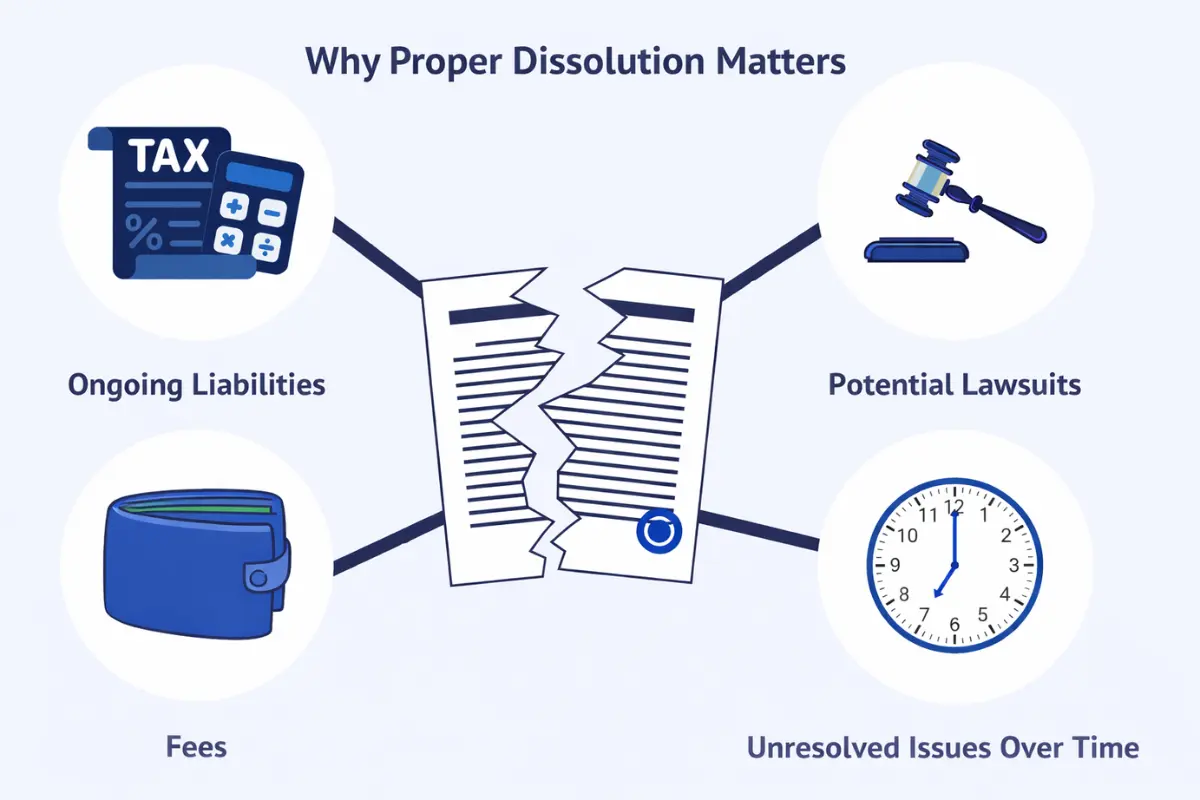
Key Takeaways
- Company dissolution ends a business’s legal existence. Once dissolved, a company can no longer operate, enter contracts, or function as a legal entity with the state.
- Dissolution may be voluntary or involuntary. Businesses can dissolve by choice or be dissolved by the state for failing to meet legal or compliance requirements.
- Dissolving a business requires formal legal steps. Proper dissolution involves filing required documents, winding up operations, settling debts, and completing final obligations.
- Dissolution affects owners, employees, and creditors. Liability protections may be lost, employees must be paid, and creditors have the right to pursue outstanding claims.
Definition of Dissolution
Company Dissolution Definition
Company dissolution is the formal legal process that terminates a business entity’s existence with the state where it was formed. When dissolution occurs, the business stops being recognized as an active legal entity and loses its authority to conduct business.
According to SCORE, a nonprofit resource partner of the SBA: “A dissolution is a formal closure of a business with its state of incorporation. Formally closing a business means the registered company is no longer seen as active through the eyes of the state.”
Dissolved Business Meaning
When a company is dissolved, the business can no longer legally operate, enter contracts, own assets, or conduct business activities. The company loses its standing with the state and its liability protections.
For LLC members and corporate shareholders, dissolution usually means the shield protecting personal assets from business debts disappears. If your dissolved LLC still owes money, you might find yourself personally responsible.
A dissolved business also loses its registered business name, which becomes available for others to use.
Reasons for Company Dissolution
Voluntary Dissolution
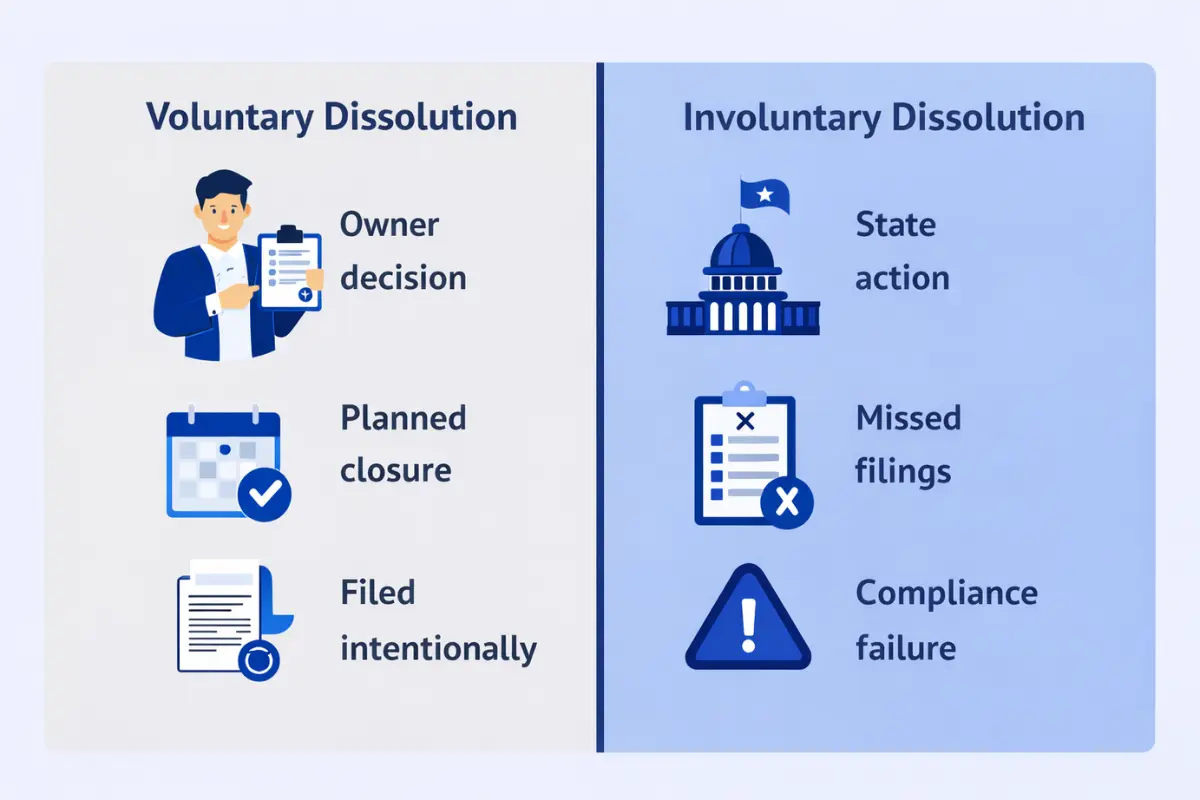
Voluntary dissolution happens when business owners intentionally close their company and file the proper paperwork with the state.
Common reasons include business goals achieved or changed, financial challenges making operations unsustainable, partnership disputes that can’t be resolved, sale or merger with another company, or switching business structures.
Voluntary dissolution allows owners to maintain control, protect their reputation, and ensure obligations are handled responsibly.
Involuntary Dissolution
Involuntary dissolution occurs when the state forces a company to close for failing to meet legal requirements. This happens without the owner’s consent and often catches business owners by surprise.
The most common triggers include failure to file annual reports, non-payment of state fees and taxes, lack of a registered agent, or fraudulent formation.
Many states require businesses to file annual or biennial reports. Missing these deadlines can trigger automatic dissolution. Even small unpaid amounts can lead to dissolution if ignored.
Every business needs a registered agent to receive legal documents. If your registered agent resigns and you don’t replace them, the state may dissolve your company.
Involuntary dissolution creates serious problems. You lose liability protection while potentially still owing business debts. Many owners discover their company was dissolved only when they try to file documents or get sued personally.
The Company Dissolution Process
Initial Decisions and Approvals
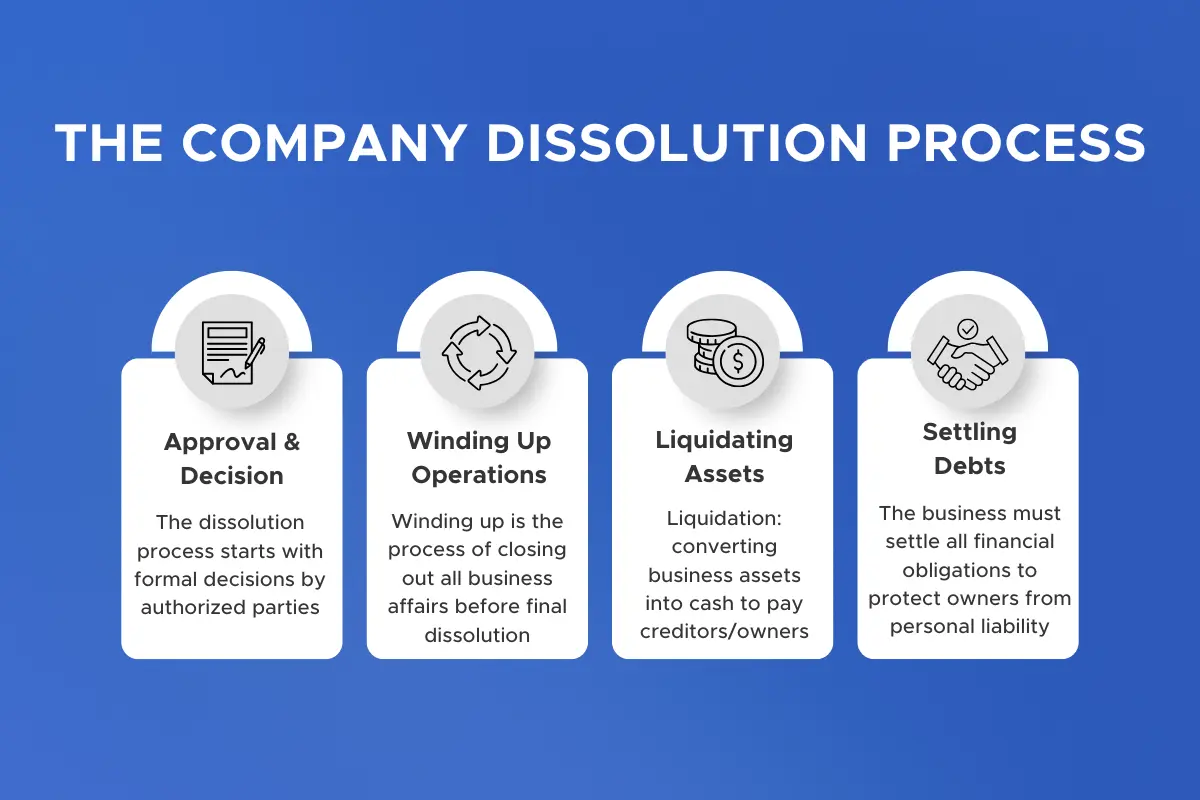
The dissolution process starts with formal decisions by authorized parties. For LLCs, members vote according to the operating agreement. Corporations require board and shareholder approval.
The business then files Articles of Dissolution with the Secretary of State.
Winding Up a Business
Winding up is the process of closing out all business affairs before final dissolution.
The U.S. Small Business Administration explains: “Closing a business requires you to complete a number of legal and administrative steps.”
Key activities include notifying employees, customers, vendors, and creditors. You’ll also need to complete contracts, collect accounts receivable, and cancel licenses and permits.
Liquidating Assets
Liquidation means converting business assets into cash to pay creditors and distribute remaining funds to owners. Assets include equipment, inventory, real estate, vehicles, and intellectual property.
Secured creditors get paid first from assets securing their loans. Tax obligations come next. Unsecured creditors get paid from remaining assets. Only after debts are settled can funds be distributed to owners.
Settling Debts and Obligations
Before final dissolution, the business must settle all financial obligations to protect owners from personal liability.
The IRS states: “When you close your business, you must file a final return and take care of other federal tax responsibilities.” This includes filing final tax returns, paying taxes owed, and closing your employer identification number.
Additional obligations include employee wages, vendor debts, lease obligations, and legal judgments.
Consequences of Dissolution
What Happens to Employees?
When a company dissolves, employees lose their jobs. The business has specific obligations that must be handled properly.
Employees must receive final paychecks including earned wages, overtime, commissions, and accrued vacation time. Many states require final payment within a specific timeframe.
Health insurance typically ends on the dissolution date, but employees may qualify for COBRA continuation coverage. Retirement plan assets must be distributed or rolled over.
Impact on Creditors and Stakeholders
Creditors and stakeholders face significant impacts when a company dissolves, especially if the business doesn’t have enough assets to pay all debts.
Creditors must file claims during the dissolution process within a specified timeframe. Those who don’t file may lose their right to collect. Even creditors who file might not get fully paid if assets don’t cover debts.
Partners and shareholders receive distributions only after all creditors are paid. If debts exceed assets, owners receive nothing and might be personally liable.
Getting Help With Company Dissolution and Compliance
Navigating company dissolution requires attention to legal requirements, tax implications, and state-specific procedures. Missing steps can create personal liability or compliance issues.
That’s where we could help. Many business owners choose DoMyLLC to ensure filings are completed correctly and on time. We help maintain registered agent compliance during the dissolution process and assist with administrative tasks that keep your business in good standing.
For businesses wanting to avoid dissolution, maintaining compliance is essential. This means filing annual reports on time, keeping your registered agent current, and paying state fees promptly. Contact us for help maintaining compliance or navigating dissolution.
FAQs About Company Dissolution
When a company is dissolved, it no longer legally exists with the state and loses the authority to operate, enter contracts, or conduct business.
Once dissolved, the business loses its good standing and liability protections for its owners. Dissolution does not automatically eliminate outstanding debts or legal obligations, and creditors may still pursue claims against the business or, in some cases, its owners.
Yes, a dissolved business can often be reopened through a process called reinstatement, though rules vary by state.
Reinstatement typically requires correcting the reason for dissolution, filing reinstatement paperwork, and paying all past-due fees, taxes, and penalties. Many states allow reinstatement within a limited time window. Businesses that were voluntarily dissolved may need to form a new entity instead.
Outstanding debts do not disappear when a company is dissolved.
The business must notify creditors and settle liabilities during the dissolution process. Secured creditors are paid first, followed by tax obligations and unsecured creditors. If debts exceed available assets, creditors may not be fully paid, and owners could face personal liability if dissolution steps were not handled properly.
You can check your company status through your state's Secretary of State website. Most states maintain online databases where you can search by business name or employer identification number to see if your limited company is active, dissolved, or in good standing.
If your business was involuntarily dissolved for failure to file annual reports or maintain a registered agent, the state records will show this. For businesses no longer active, the record will show the dissolution date and reason. This company status information is available to interested parties including creditors and potential business partners.
Voluntary dissolution is a straightforward process where business owners choose to close their company and wind up affairs in an orderly manner. Members voluntary liquidation occurs when a solvent company decides to close, distributing assets to shareholders after debts are settled.
Compulsory liquidation happens when a court order forces insolvent companies to close because they can't pay debts. In this situation, an insolvency practitioner takes control, sells assets, and distributes proceeds to the company's creditors according to legal priority.
The key difference: voluntary dissolution gives owners control over business closing, while compulsory liquidation removes control when the company is no longer able to meet financial obligations.
Access to a business bank account after dissolution is usually limited and may be restricted by the bank.
Financial institutions often freeze accounts once they learn a company no longer legally exists. Before dissolution becomes final, remaining funds should be used to pay debts, handle final taxes, and distribute any remaining assets. Unclaimed funds may eventually be turned over to the state.