

The Complete Guide to Re-Domesticate Your LLC: What You Need to Know
You built your business from the ground up. Now you are ready to move to a new state, maybe for better tax laws, lower costs, or a fresh market. But what happens to your LLC?
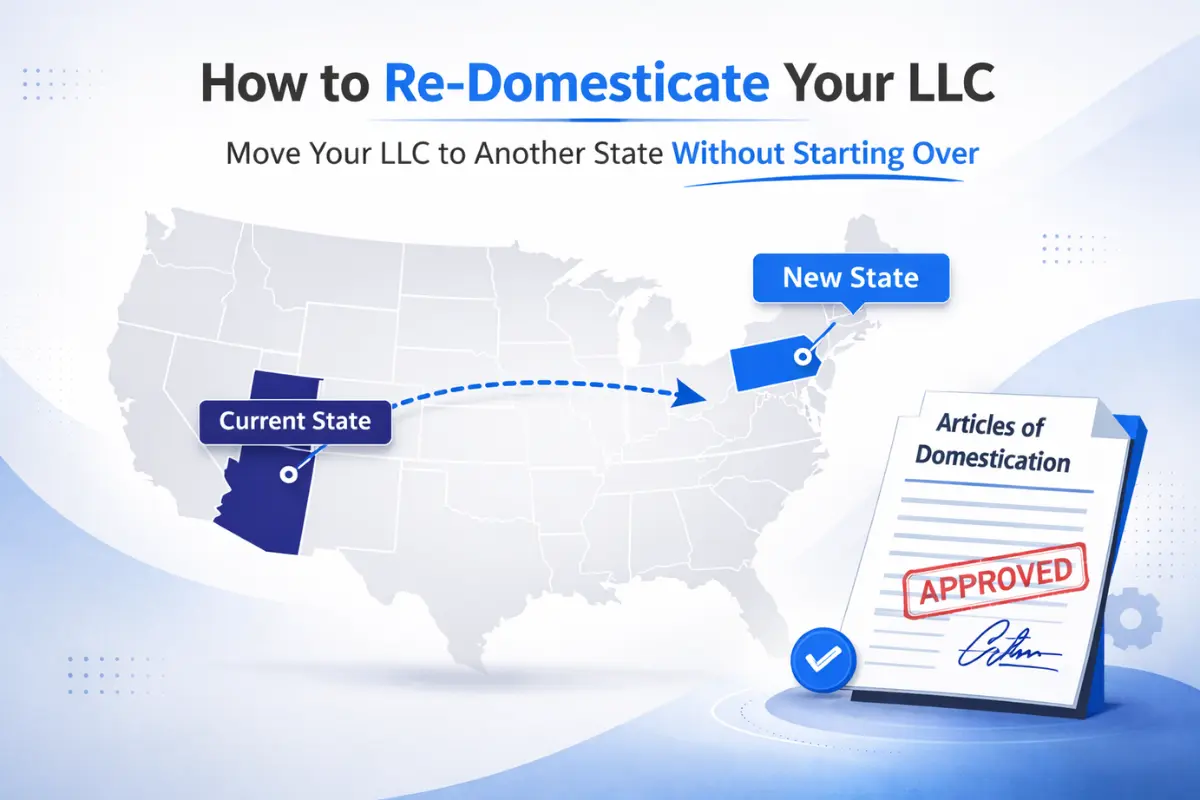
The good news: you don’t have to shut everything down and start over. You can re-domesticate your LLC, essentially moving it to a new state while keeping your existing business structure intact. It’s a cleaner, smarter option than dissolving and reforming, and it keeps your business running without a major disruption.
Whether you’re relocating for personal reasons or strategic ones, DoMyLLC’s complete guide to LLC re-domestication will walk you through everything you need to know to make a smart, compliant move.
Key Takeaways
- Re-domesticating your LLC lets you move your business to a new state without dissolving and reforming.
- You’ll need to file Articles of Domestication in your new state (and sometimes withdraw from your old one).
- Not every state allows domestication; some will require you to dissolve and re-register instead.
- Common reasons to move include better taxes, lower fees, or changing your personal location.
- Your EIN, existing contracts, and business history carry over through domestication.
- Working with professionals can save you time, money, and compliance headaches.
What is LLC Domestication?
LLC domestication is a legal process that changes an LLC’s state of formation from one state to another, when both states’ laws allow it. It is sometimes called re‑domestication or statutory conversion. Instead of dissolving the old LLC and forming a new one, the same LLC continues under the new state’s law. The LLC keeps its legal identity, including its EIN, contracts, assets, and liabilities. Because it is treated as the same entity, its rights and obligations generally remain in place after the move.
Reasons to Re-Domesticate Your LLC
Business owners re‑domesticate for several practical reasons. States such as Wyoming, Nevada, and Delaware are known for business‑friendly LLC laws and, in some cases, favorable state‑level tax treatment, though the real benefits depend on where you operate. If you move your home or primary place of business to a new state, it can make sense to have your LLC formed there rather than in your old state. Some states offer lower annual report and franchise fees, and certain jurisdictions provide stronger privacy protections for LLC owners. Forming or re‑domesticating into your main operating state can also simplify compliance and may reduce the need to maintain foreign registrations in multiple states.
For example, a single‑member LLC that was originally formed in California but now operates primarily in Texas may find it more cost‑effective to re‑domesticate into Texas instead of paying California’s ongoing LLC fees and maintaining a separate Texas foreign registration.
The U.S. Small Business Administration notes that expanding into a new state generally requires registering with that state’s agencies and paying the appropriate taxes, and aligning your formation state with where you do business is one way to meet those obligations efficiently.
How LLC Domestication Works
The basic concept is simple: you’re asking one state to accept your LLC as a domestic entity. The idea stays the same everywhere, but the specific filings, forms, and approvals can differ significantly from state to state.
Some states have a domestication or conversion statute that allows an LLC formed elsewhere to convert into a domestic LLC in that state. Others do not allow inbound domestication at all, which often means you must either dissolve your LLC in the original state and form a new one in the new state, or use another method such as foreign registration or a merger.
According to Forbes, “While any business can leave a state, not every state allows companies to redomesticate into it; when that option is unavailable, owners may have to dissolve in the old state and form a new entity in the new state, which is usually more complex and expensive than straightforward domestication.”
This is why it’s critical to research both states before assuming domestication is an option. Your starting state and destination state both determine what’s possible, and if either one does not support domestication, you’ll need a different approach, so finding that out early helps you choose the right plan and avoid extra cost and complexity.
The Process of Moving Your LLC to Another State
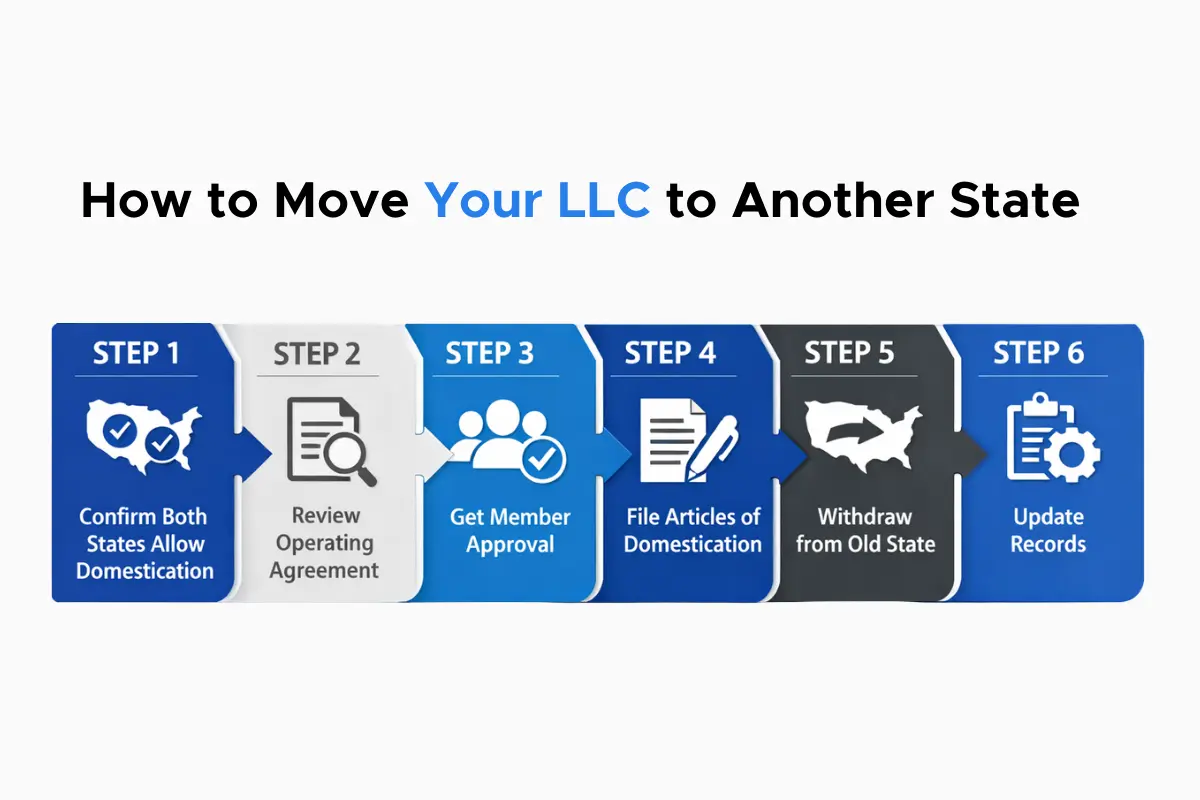
While the exact steps vary by state, here’s a general overview of how re‑domestication typically works:
- Confirm both states allow domestication. Not all states have domestication or conversion statutes, so you need to verify that both your current state and your destination state permit LLC domestication.
- Review your LLC operating agreement, since some agreements include provisions about transfers, conversions, or moves to another state.
- Get member approval, because most domestication laws require member consent, often by all members or by the voting threshold in your agreement, before you re‑domesticate.
- File Articles of Domestication (or the equivalent form) in the new state; this is the primary filing that makes your LLC a domestic entity there.
- File a Certificate of Dissolution or Withdrawal in your old state. Most states require you to formally cancel your LLC’s registration there.
- File the required dissolution or withdrawal paperwork in your old state so that your LLC’s registration there is formally ended or withdrawn.
After the state filings are approved, update your business records. Notify the IRS of your new business address, update your bank and payment accounts, and inform clients, vendors, and partners about the change in your state of registration.
One step many business owners overlook is updating the registered agent: you must have a registered agent with a physical address in your new state and list that agent in your domestication paperwork.
It can feel like a lot of steps, and in some cases it is, but following your states’ requirements and working with experienced professionals can make the process much more manageable.
Required Articles of Domestication
The Articles of Domestication (sometimes called a Certificate or Statement of Domestication) is the formal document you file with the business‑filing office in your new state, often the Secretary of State. It’s essentially your LLC’s official request to become a domestic entity in that state.
While requirements vary, Articles of Domestication commonly include:
- The name of your LLC (and any new name if it will change).
- The state where your LLC was originally formed.
- A statement that the LLC has complied with the legal requirements of its original state in authorizing the domestication.
- The effective date of the domestication, if it is not effective upon filing.
- The name and street address of your new registered agent in the destination state.
Some states also require you to submit a current Certificate of Good Standing from your original state and may request a copy of your Articles of Organization or other formation documents. Filing fees vary by state but are typically in the range of about $50 to a few hundred dollars.
One important note: once domestication is complete, your LLC’s existence continues without interruption, but it is now treated as a domestic LLC of the new state. That has real consequences for contracts, liability, and compliance, because you keep the same entity while becoming subject to the new state’s LLC laws, so it is worth reviewing any major differences in those laws before you finalize the move.
How DoMyLLC Can Help
Re-domesticating your LLC involves multiple filings, deadlines, and state-specific requirements, and getting them wrong can be costly. DoMyLLC handles the paperwork from start to finish, covering everything from verifying state eligibility to filing your Articles of Domestication and keeping your registered agent information current.
Ready to re-domesticate your LLC? Contact DoMyLLC today to get started with expert guidance tailored to your situation.
Conclusion
Moving your LLC to a new state doesn’t have to mean starting from scratch. Re‑domesticating your LLC lets you preserve your existing business identity, including your contracts, your EIN, and your history, while giving you the benefits of the new state’s laws and tax environment.
The process involves careful research, proper filings in both states, and staying on top of compliance along the way. Get the steps right, and the transition can be surprisingly smooth. Get them wrong, and you could face administrative headaches or compliance gaps that cost you more in the long run.
The key is knowing what you’re walking into before you start. Understanding your options, confirming state eligibility, and having the right professionals in your corner makes all the difference.
FAQs
Not always. Both your current state and your destination state need to allow domestication. Some states don't have domestication statutes, which means you'd need to dissolve your LLC and form a new one instead. Always verify before moving forward.
No. Your Employer Identification Number (EIN) stays the same after domestication. You'll want to notify the IRS of your new state address, but the EIN itself doesn't change.
It's a good idea to update your Operating Agreement to reflect the new state's laws and your new registered agent information. Your core agreement typically carries over, but you'll want it to stay compliant with the new state's requirements.
Timelines vary by state. Some states process domestication filings within a few business days; others can take a few weeks. Expedited processing is often available for an additional fee if you're working against a deadline.
Foreign qualification lets your LLC operate in a second state while staying registered in its home state. Domestication actually moves your LLC's home state. If you are fully relocating your business, domestication is typically the cleaner long-term option, especially if you want to avoid paying fees and filing reports in two states indefinitely.
Re‑domesticating your LLC does not trigger a taxable event by itself, because the LLC's legal existence continues and there is no transfer of ownership or sale of assets. However, tax consequences can vary depending on the states involved. Your new state will have its own income tax rates, franchise tax rules, and requirements for how it treats a pass‑through entity, and some states do not impose a state income tax, which is a common reason small business owners choose to re‑domesticate. You may also have final tax obligations, such as a last annual report or franchise tax payment, in your previous state before your old LLC registration is fully closed. Always consult a tax professional before you move so you understand what your new state requires and how the change will affect your business income.
Yes, in many cases you will. After your LLC is domesticated into a new state, licenses and permits from your old state usually do not carry over, so you'll often need to apply for new ones at the state and possibly local level in the new state. You must also maintain a valid business address in the new state (such as an office, home address if allowed, or registered agent address) and update that address on key records like contracts, bank accounts, and government registrations.
It depends on the timing and how cleanly you close out your registration in the original state. Most states require you to stay in good standing and file any outstanding annual reports before they will approve your withdrawal or dissolution paperwork. If you skip this step, your old state may keep expecting filings and fees even after you have re‑domesticated. To avoid this, make sure your existing LLC is fully withdrawn or dissolved in the original state as part of the process.
Once that is confirmed, you will usually only owe annual fees and reporting obligations in your new state. If your LLC was registered as a foreign LLC in any other states, those foreign registrations also need to be formally withdrawn to stop compliance obligations there.
Not all states have domestication or statutory conversion laws, so your current state may not let you domesticate your LLC. In that situation, a common approach is to form a new LLC in your destination state and then properly dissolve the old LLC in your original state. That usually means transferring assets and contracts to the new LLC and making sure the old entity is fully wound up so you do not leave compliance or tax issues behind. Because options vary by state (and some states offer limited or no domestication), it is important to confirm your state's specific rules before you decide on a path.
For straightforward situations, a professional formation service can handle the filing process efficiently. But if your LLC has multiple members, significant assets, active contracts, employees, or complex tax accounts, working with a business attorney is a smart investment. Legal or financial complications can arise when LLC members disagree on the move, when contracts have jurisdiction clauses that need updating, or when the entire process spans multiple states with different LLC laws. A business attorney can help you review your operating agreement, gain approval from all necessary parties, and navigate any state-specific requirements that could create financial complications down the road. Think of it this way: the cost of getting proper guidance upfront is almost always less than the cost of untangling problems after the fact.
Disclaimer: This content is intended for general educational and informational purposes only and does not constitute legal, tax, or accounting advice. Every effort is made to keep the information current and accurate; however, laws, regulations, and guidance can change, and no representation or warranty is given that the content is complete, up to date, or suitable for any particular situation. You should not rely on this material as a substitute for advice from a qualified professional who can consider your specific facts and objectives before you make decisions or take action.