

LLC Reinstatement vs Renewal: What’s the Difference? (2026 Guide)
One missed deadline. That’s all it takes for your LLC to go from active and protected to administratively dissolved by the state. Most business owners don’t realize there’s a real difference between LLC reinstatement vs renewal until they’re already dealing with the fallout. And by then, the fix is more complicated and more expensive than it needed to be.
Whether you’re trying to stay ahead of compliance or you’re already looking at a dissolved LLC, understanding these two processes could save you serious time and money. At DoMyLLC, we help business owners get this right before it becomes a crisis.
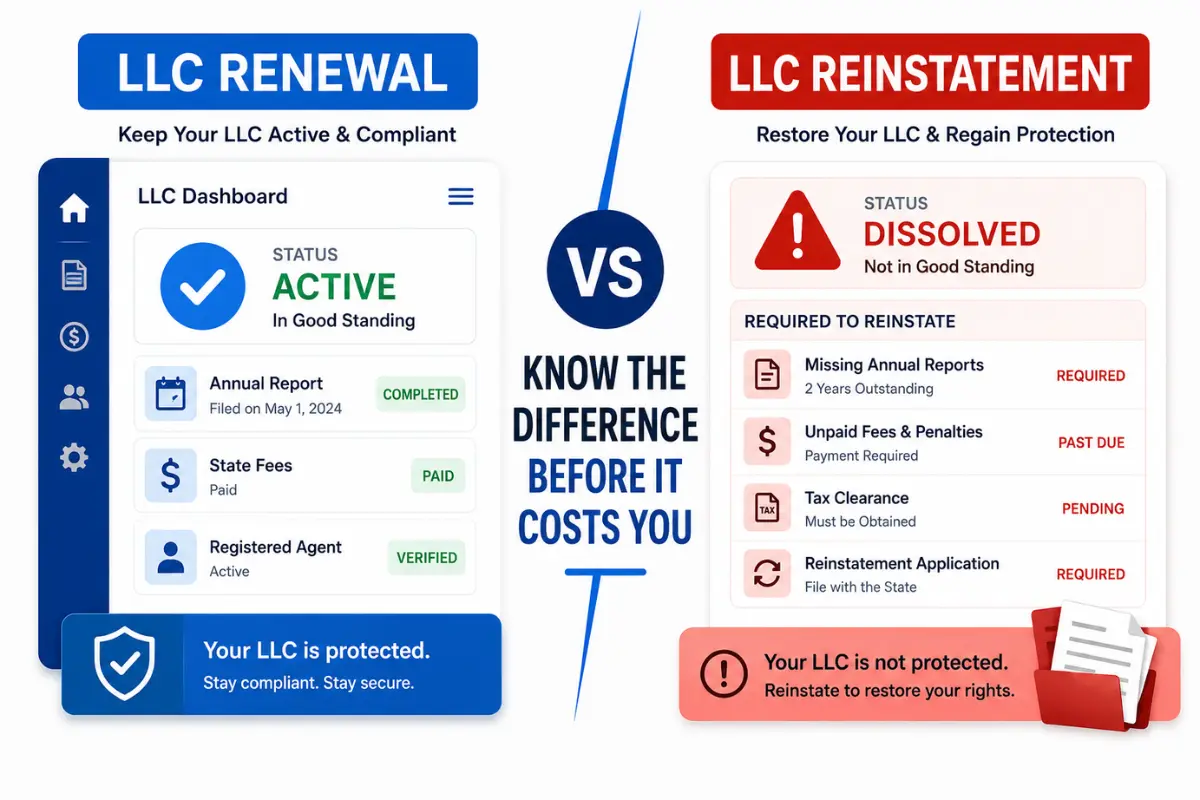
Key Takeaways
- LLC renewal keeps your business active and compliant
- LLC reinstatement restores a dissolved or inactive LLC
- Missing renewal deadlines can lead to penalties or administrative dissolution
- Reinstating an LLC may require back fees, reports, and tax clearance
- Restoring good standing depends on state requirements and compliance status
What Is LLC Renewal?
Think of LLC renewal as routine maintenance. Just like a car needs regular oil changes to keep running, your LLC needs periodic filings to stay legally active.
According to the U.S. Small Business Administration (SBA), most LLCs are required to file annual or biennial reports to remain compliant with state regulations. Skipping these filings, even just once, can set off a chain of compliance problems.
Why States Require LLC Renewals
States don’t require renewals to be difficult. They require them to keep their business records accurate and up to date. Here’s what renewals are designed to track:
- Annual reports that confirm your LLC is still operating
- Franchise taxes or state fees owed each year
- Registered agent verification to ensure the state can reach your business
- Overall state compliance tracking for active business entities
Common LLC Renewal Requirements
LLC renewal requirements vary by state, but most involve the same core tasks:
- Filing annual or biennial reports with the state
- Paying required renewal fees
- Updating your business address, ownership, or other key information
- Maintaining a registered agent who can receive legal documents on behalf of your LLC
What Happens When You Renew on Time
Staying current with your LLC renewal requirements pays off in more ways than one. When you renew on time, you:
- Maintain good standing with the state
- Avoid late penalties and interest charges
- Preserve the liability protection that makes an LLC worth having
- Keep your business name locked in and protected
What Is LLC Reinstatement?
LLC reinstatement comes into play after your business has fallen out of good standing. If your LLC has lost its active status, typically due to missed filings or unpaid fees, reinstatement is the process used to restore it. It is generally more complex and costly than a standard renewal.
For a step by step breakdown, see our guide on how to reinstate a dissolved LLC. It explains the full process and what to expect.
When an LLC Needs Reinstatement
Your LLC may need reinstatement if:
- The state has dissolved it administratively
- You missed one or more renewal deadlines
- Unpaid fees or taxes triggered a loss of status
- Your LLC fell out of compliance for another reason
How LLC Administrative Dissolution Happens
LLC administrative dissolution is a state-triggered process. It doesn’t require a lawsuit or any formal court action. The state simply removes your LLC from active status when it stops receiving the filings or payments it expects.
Here’s how it usually happens: you miss an annual report deadline, and the state sends a notice that may go to an outdated address or get overlooked. After a few months, the state administratively dissolves your LLC. At that point, your business is no longer recognized as a legally protected entity, even if you are still operating.
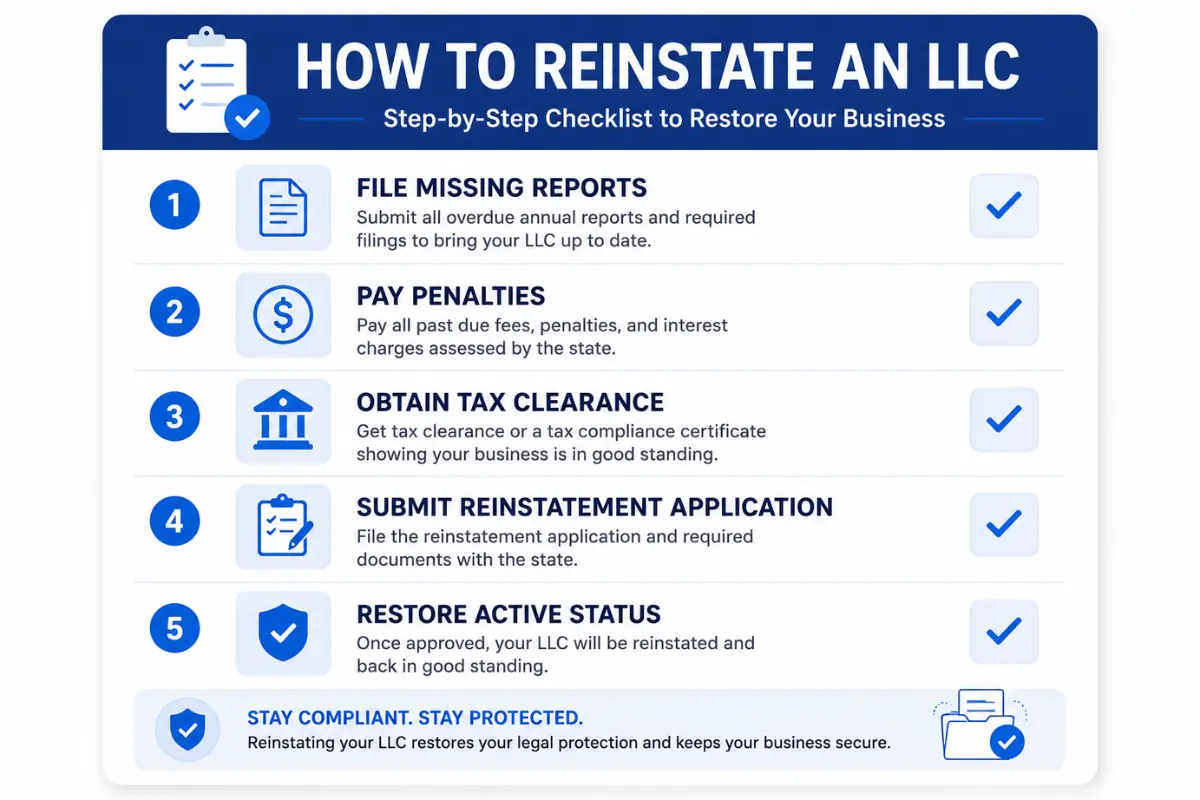
How to Reinstate an Expired LLC
Learning how to reinstate an expired LLC involves a few more steps than a standard renewal. Here’s the general process:
- Determine whether your LLC is eligible for reinstatement in your state
- File any missing annual reports or other required documents
- Pay all outstanding penalties and fees
- Obtain tax clearance if your state requires it
- Submit a formal reinstatement application to the state
State-specific steps can differ significantly. Check out our state guides for California, Illinois, and New York for more detail.
LLC Reinstatement vs Renewal
Difference Between LLC Reinstatement and Renewal
The difference between LLC reinstatement and renewal comes down to timing and status. Renewal is proactive. Reinstatement is reactive. Here’s a quick comparison:
| Factor | Renewal | Reinstatement |
|---|---|---|
| Status | Prevents loss of status | Restores lost status |
| Timing | Done while LLC is active | Done after dissolution |
| Frequency | Usually annual | Only needed after noncompliance |
| Cost | Lower fees | Higher fees and penalties |
| Process | Simpler process | More documentation required |
LLC Renewal vs Reinstatement Costs
When comparing LLC renewal vs reinstatement from a cost standpoint, renewal almost always wins. Renewal filing fees are relatively modest, often ranging from $25 to $150 depending on the state. Reinstatement, on the other hand, piles on:
- Reinstatement application fees (often $100 or more)
- Late penalties on missed annual reports
- Back taxes or franchise tax payments
- Potential costs for obtaining tax clearance certificates
The longer you wait to act, the more expensive reinstatement becomes.
Timeframes and Processing Differences
Timeframes and processing work very differently for renewals and reinstatements. Renewal is usually fast, and many states process annual reports within a few business days, especially when filed online.
Reinstatement often takes longer, sometimes several weeks, particularly in states that require tax clearance from a separate agency before they will approve the reinstatement application. Processing times also vary widely from state to state, so it is smart to plan ahead and not expect an overnight turnaround.
What Happens if an LLC Is Not Renewed?
A lot of business owners assume that if they stay quiet, nothing will happen. That’s not how it works. What happens if an LLC is not renewed can range from minor inconveniences to serious legal and financial problems.
Loss of Good Standing
The first thing that happens when you miss a renewal is a change in your status on state records. Your LLC goes from “active” to “delinquent” or “not in good standing.” That status change matters more than most people realize.
You may be unable to get a Certificate of Good Standing, which lenders, partners, and government agencies often require before doing business with you.
Risk of Administrative Dissolution
If you don’t correct the problem, the state will eventually mark your LLC as dissolved. Once that happens, your business name may become available for someone else to register, and your legal protections as an LLC are at risk.
Potential Legal and Financial Consequences
The fallout from a dissolved or lapsed LLC can reach into multiple areas of your business:
- Penalties and interest that accumulate over time
- Banking complications, since some banks require proof of active status
- Contract complications, as counterparties may question your legal standing
- Reduced or eliminated liability protection if your LLC is no longer recognized as active
Tax obligations don’t pause just because your state compliance has lapsed. As the IRS explains, businesses are responsible for staying current with tax filings and payment obligations, even when state compliance problems occur.
Does Reinstating an LLC Restore Good Standing?
This is one of the most common questions we hear: does reinstating an LLC restore good standing? In most cases, yes.
Once you complete the reinstatement process and the state approves your application, your LLC is typically restored to active status. Some states even offer retroactive reinstatement, which means your LLC is treated as if it was never dissolved. That can be important for contracts or agreements that were made during the gap period.
Situations Where Additional Action May Be Required
Reinstatement alone doesn’t always close every open issue. Depending on your situation, you may also need to:
- Obtain tax clearance from your state revenue agency
- Renew any business licenses or permits that lapsed
- Update federal or state compliance filings that fell behind
When Should You Renew vs Reinstate an LLC?
Signs Your LLC Only Needs Renewal
You probably just need a renewal if:
- Your LLC still shows as active in state records
- You have not received an administrative dissolution notice
- You missed a recent filing deadline but the state hasn’t yet changed your status
Signs Your LLC Needs Reinstatement
Reinstatement is likely needed if:
- The state lists your business as dissolved or inactive
- You received a formal administrative dissolution notice
- You’ve lost good standing and can no longer obtain state certificates
State Differences in LLC Renewal and Reinstatement
Renewal Requirements Vary by State
Some states require annual reports. Others only require them every two years. Deadlines range from the anniversary of your formation date to fixed calendar dates. Fees also vary widely. What works in one state may not apply at all in another.
Reinstatement Rules Also Differ
Some states allow reinstatement for years after dissolution. Others have strict windows, after which the LLC cannot be reinstated and must be re-formed entirely. Some states require tax clearance; others don’t. Some use standardized forms; others require custom applications.
Because the rules differ so much, working with a compliance professional like DoMyLLC is the most reliable way to get it right.
How to Avoid LLC Reinstatement Problems
Stay Ahead of Renewal Deadlines
The easiest way to avoid reinstatement is to never need it. Set calendar reminders well before your annual report due dates. Mark both the deadline and a reminder two to four weeks out so you have time to gather what you need.
Maintain Accurate Business Records
Many dissolution notices go unread because they’re sent to outdated addresses. Keep your records current, including:
- Your registered agent information
- Your business address on file with the state
- Ownership or member changes that need to be reported
Use a Compliance Service
The most reliable solution is to let professionals handle it. Professional services like DoMyLLC monitor your filing deadlines, send alerts before due dates, and can file reports on your behalf. That way, important deadlines and filings are less likely to be missed, helping your LLC remain in good standing with the state.
Conclusion
Renewal and reinstatement serve very different purposes. Renewal is what keeps your LLC healthy and compliant year after year. Reinstatement is the more complicated, more expensive process of bringing an LLC back after it’s been dissolved.
The good news is that reinstatement problems are almost entirely avoidable. With the right reminders, accurate records, and a compliance partner watching your back, you can keep your LLC in good standing without the stress.
Need Help Keeping Your LLC in Good Standing?
Whether you need help filing your next annual report or you’re ready to start an LLC, our team has you covered. We track compliance deadlines, manage annual report filings, and support business owners through the reinstatement process when necessary.
Don’t wait until you’re dealing with a dissolved LLC to take action. Contact us today to get your LLC on a clear path forward.
FAQs
No. Renewal is an ongoing compliance requirement for active LLCs. Reinstatement is a separate process used to restore an LLC that has already been dissolved or lost its active status.
Missing a renewal deadline can lead to late fees, loss of good standing, and eventually LLC administrative dissolution. Once dissolved, you'll need to go through the reinstatement process to restore your business.
In most states, yes. However, eligibility depends on how long the LLC has been dissolved and whether you can satisfy all outstanding requirements, including back fees, missing reports, and sometimes tax clearance.
In most cases, yes. Once a state approves your reinstatement application and all fees and filings are satisfied, your LLC is returned to active, good-standing status. Some states offer retroactive reinstatement as well.
Technically, some business owners continue operating, but doing so carries real risk. When your LLC is dissolved, you may lose your liability protection, meaning personal assets could be exposed if a legal issue arises. It's best to restore good standing before continuing operations.
Most states require some form of ongoing filing, whether that's an annual report, a biennial report, or a franchise tax payment. A small number of states have minimal ongoing requirements, but they are the exception, not the rule. Check your specific state's requirements to know exactly what's expected.
A grace period for LLC renewal is a short window after a missed annual report or fee deadline during which you can still file and pay without losing your LLC's active status. Not all states offer a grace period, and those that do vary in length. If the grace period expires, your LLC may be administratively dissolved and require full reinstatement instead of a simple renewal. To avoid complications, it's best to file on time each year.
In many states, you can submit a reinstatement application online through the secretary of state, including payment of fees, penalties, and taxes. However, some states still require paper forms or specific payment methods. Requirements also vary by entity type, so check with your state's office before filing.
An administratively dissolved LLC may lose its liability protection, meaning owners could be personally liable for debts or legal claims if the business continues operating. Courts in some states support this risk. To restore protection, it's safest to reinstate the LLC as soon as possible.
Disclaimer: This content is intended for general educational and informational purposes only and does not constitute legal, tax, or accounting advice. Every effort is made to keep the information current and accurate; however, laws, regulations, and guidance can change, and no representation or warranty is given that the content is complete, up to date, or suitable for any particular situation. You should not rely on this material as a substitute for advice from a qualified professional who can consider your specific facts and objectives before you make decisions or take action.