

Is an LLC Worth It? Benefits, Costs & Key Considerations
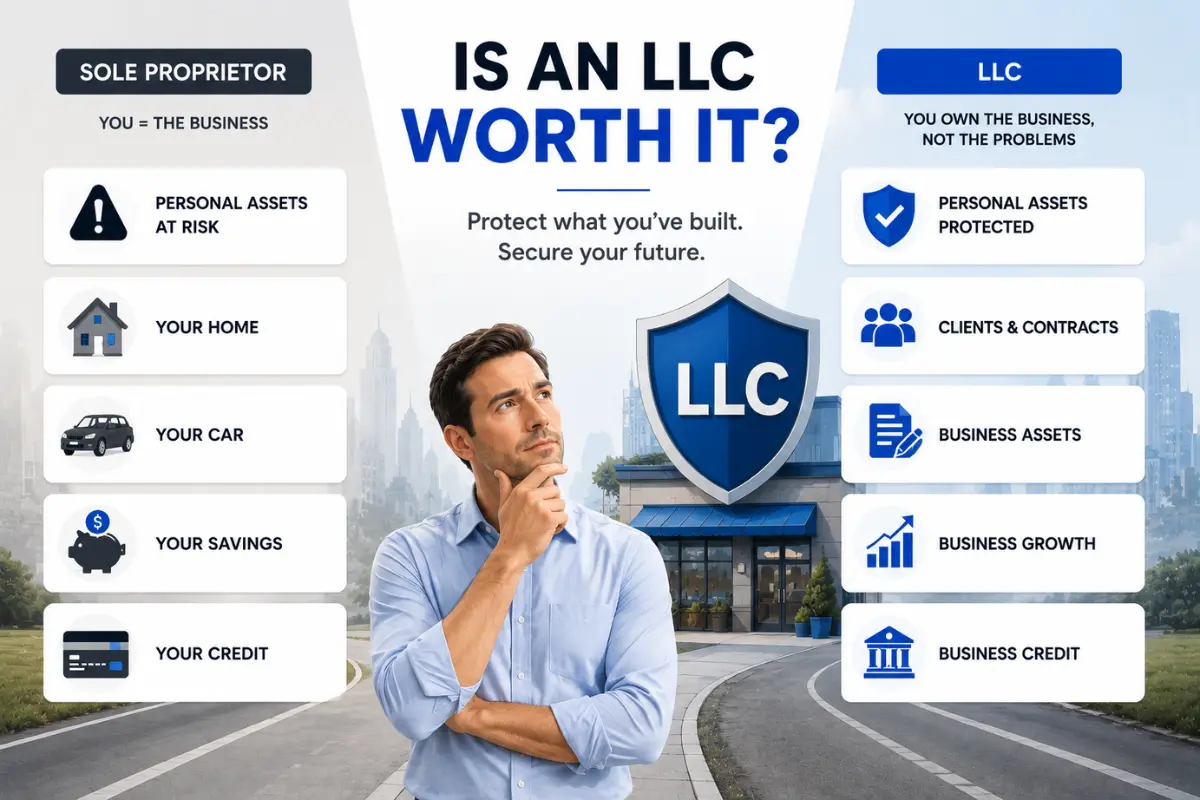
One lawsuit is all it takes to wipe out everything you’ve built. If you’re running your business as a sole proprietor, your house, your car, and your savings are all fair game the moment a client, vendor, or accident turns into a legal claim. So is an LLC worth it? For most business owners with customers, contracts, or business assets, the answer is yes, and the cost of that protection is often smaller than people expect.
Whether an LLC is truly worth it for you depends on how much liability risk your business carries, how you want to be taxed, and where you see your business heading. Working with DoMyLLC’s formation specialists is one way business owners get clarity on these questions before they file anything. Below, we’ll cover what an LLC does, its benefits and drawbacks, how it compares to a sole proprietorship, and how to tell if forming one fits your situation.
Key Takeaways
- An LLC separates your personal assets from business liabilities, so creditors generally can’t pursue your house, car, or savings if the business is sued or can’t pay its debts.
- Businesses with customers, contracts, inventory, or growth plans typically benefit most from LLC protection, while low-risk hobby businesses may not need it yet.
- LLCs use pass-through taxation by default, avoiding the double taxation C corporations face, and owners can later elect S corp status to reduce self-employment taxes.
- Forming an LLC adds professional credibility, making it easier to open business bank accounts, secure vendor terms, and win customer trust.
- State filing fees generally run $50–$200, with most states also requiring a registered agent and ongoing annual report fees to stay in good standing.
- You can start as a sole proprietor and convert to an LLC later once your business grows or your liability exposure increases.
What Does an LLC Actually Do?
An LLC, or limited liability company, is a business structure that creates a legal wall between you and your business. Once you form one, your LLC becomes its own separate legal entity, distinct from you as a person. That separation is what limits your personal liability. If your business gets sued or can’t pay a debt, creditors generally can’t come after your house, your car, or your personal bank account. They’re limited to what the business itself owns.
According to the IRS, a limited liability company is a business structure created under state law, and its owners are generally protected from personal liability for the business’s debts and obligations.
LLCs also offer ownership flexibility. You can run one as a single member LLC, or structure it as a multi member LLC with several people sharing ownership and profits. Most states let you register an LLC entirely online, and once approved, your business entity can hold its own bank account, sign contracts, and build business credit, all without the heavier requirements a corporation carries.
Is an LLC Worth It for a Small Business?
For many small business owners, yes, an LLC is worth it. Contractors, freelancers, consultants, online business owners, home based businesses, retail shops, agencies, and service businesses tend to benefit from the structure because they interact directly with customers, sign contracts, or take on financial risk.
A freelance graphic designer working under written contracts carries different risk than someone selling crafts at a weekend market. The freelancer who signs agreements and works to deadlines faces more potential for disputes or a client who decides to pursue legal action.
The real question is whether liability protection outweighs the filing costs. If your business regularly deals with customers, holds inventory, signs contracts, or could realistically face a lawsuit, the modest cost of forming an LLC is usually worth it compared to the risk of leaving your personal assets exposed. If you’re running a hobby with very little income and almost no risk, that calculation looks different, and we’ll cover that later.
Top Benefits of Forming an LLC
Personal Liability Protection
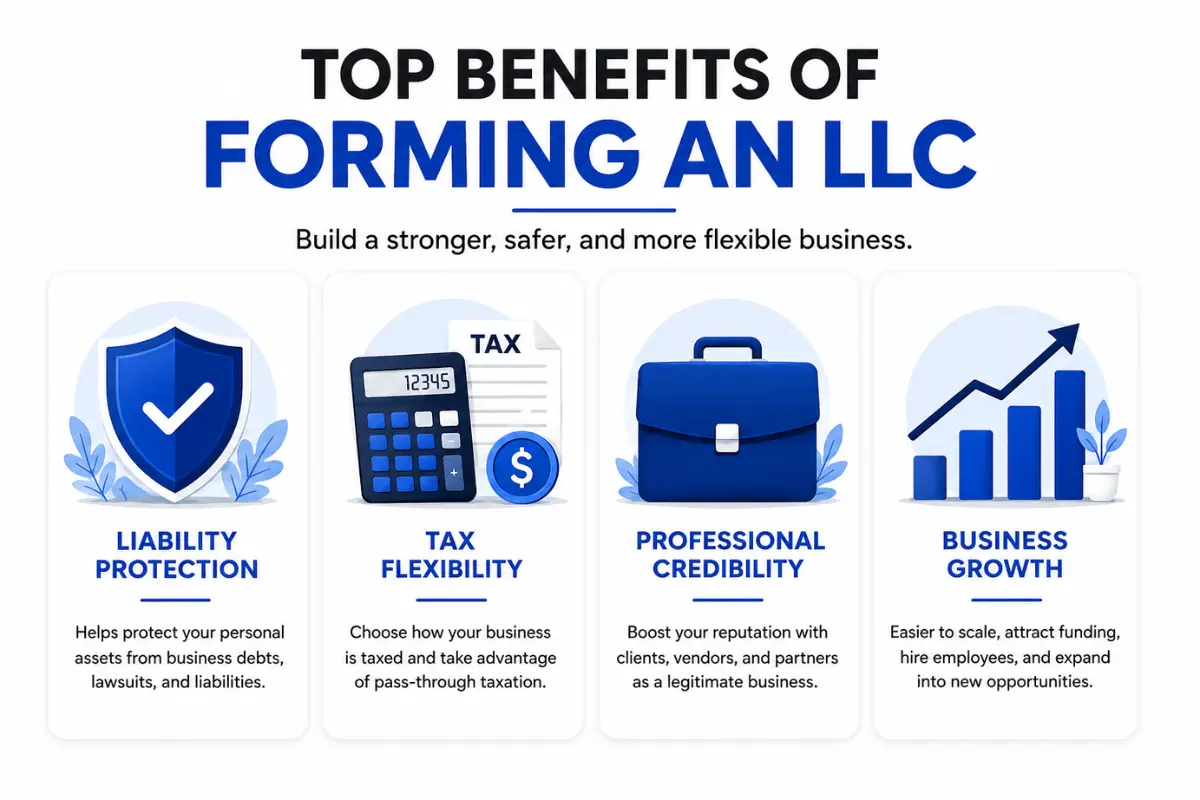
This is the number one reason business owners form an LLC. Without one, there’s no legal separation between your personal and business assets, and your savings, car, or even your house could be at risk if the business is sued or can’t pay its debts. An LLC creates a barrier between your personal assets and your business liabilities, so whoever comes after the business generally can only go after what the business owns.
The IRS explains that state laws generally protect LLC members from personal liability for the company’s debts and obligations, although the exact protections vary by state. That variation is one more reason it helps to work with someone who understands the requirements where you’re doing business.
Professional Credibility
Adding “LLC” to your business name signals something to the people you work with. Clients, vendors, and lenders tend to view it as a more established operation than an unregistered sole proprietorship. Banks are often more willing to open a dedicated business bank account, vendors may extend better terms, and customers tend to feel more confident handing over their money to a formal business entity.
Flexible Management
LLCs bend around how you want to run things. A single member LLC works well for a solo owner who wants full control, while a multi member LLC lets you bring on partners and split responsibilities and profits, without the formal boards and shareholder meetings corporations face.
If you’re weighing whether to bring on a partner or stay solo, our comparison of single member LLC vs multi member LLC breaks down how ownership structure affects taxes, control, and day to day operations.
Easier Business Growth
As your business grows, an LLC grows with you. Hiring employees, applying for business financing, adding new members, or expanding into new markets are all easier to manage under a formal business entity than as an unregistered sole proprietor, and lenders tend to prefer working with an established entity over a hobby style operation.
Tax Benefits of an LLC
One of the biggest draws of an LLC is tax flexibility. By default, LLCs use pass through taxation, so business profits and losses pass through to your personal tax return instead of being taxed at the business level first, avoiding the double taxation C corporations face. LLC owners can also write off eligible business expenses, and because LLCs aren’t locked into one tax treatment, owners can elect S corporation status once profits reach a certain point to reduce self employment taxes on part of their income.
The Qualified Business Income deduction is another advantage worth knowing about. The IRS notes that many eligible small business owners may qualify for this deduction, which can reduce taxable business income under current tax law.
If you’re trying to decide between staying taxed as a standard LLC or electing S corp status, our guide on LLC vs S corp walks through how each option affects your tax liability and paperwork.
What Are the Disadvantages of an LLC?
An LLC isn’t free, and it isn’t maintenance free either. Most states charge a filing fee to form one, and many require annual report fees to keep it in good standing.
Depending on your state, you may also need a registered agent, someone who can accept legal and tax documents on the business’s behalf during regular business hours. DoMyLLC provides registered agent services in every state, useful if you don’t have a fixed address you want listed on public record.
There are compliance obligations too, like renewing your registration and filing required reports, and you’ll need to keep your personal and business finances separate, with its own bank account, to preserve the liability protection you formed it to get. None of these drawbacks are dealbreakers for most business owners, but they’re worth weighing against the benefits before you file.
LLC vs Sole Proprietorship: Which Is Better?
There’s no single answer. It depends on your business. If you’re asking do I need an LLC or a sole proprietorship, weighing the pros and cons of LLC vs sole proprietorship side by side usually makes the decision easier.
Liability: A sole proprietorship offers no separation between you and your business, so you’re personally responsible for every business debt and legal claim. An LLC limits your personal liability to what you’ve invested.
Taxes: Both are pass through entities by default, so profits get reported on your personal tax return either way, but an LLC gives you the option to elect S corp status later.
Startup costs and compliance: Sole proprietorships cost nothing to start and have minimal ongoing requirements. LLCs require a state filing fee and generally involve annual reports and fees, but tend to have an easier time attracting financing, business credit, and new members as the business grows.
The SBA puts it simply: the business structure you choose affects taxes, personal liability, ownership, and how your business operates, so it’s important to evaluate each option before getting started.
| Feature | Sole Proprietorship | LLC |
|---|---|---|
| Liability Protection | No | Yes |
| Separate Legal Entity | No | Yes |
| Startup Costs | Lower | Moderate |
| Annual Compliance | Minimal | Varies by state |
| Credibility | Good | Higher |
| Tax Flexibility | Limited | Greater |
Are There Benefits of an LLC for Personal Use?
Sometimes, yes. Rental properties, investment properties, family owned assets, and holding companies are common cases where an LLC for personal use makes sense. Holding a rental property inside an LLC can shield your personal assets from a lawsuit tied to that property, like an injury claim from a tenant. That said, an LLC generally shouldn’t be formed just to make a personal purchase, like a car or a boat. LLCs are built for holding business assets and managing business liabilities, not for hiding personal spending. If you’re weighing whether your situation calls for one, talk with a tax professional who can look at your full financial picture.
When Is an LLC Worth It?
Here’s a practical way to think about it.
- It’s usually worth it if you:
- Have customers
- Sign contracts
- Own business assets
- Want liability protection
- Plan to hire employees
- Expect business growth
- Need financing
It may not be worth it if:
- It’s only a hobby
- You bring in very little income
- Your liability exposure is minimal
- Filing costs would outweigh the benefits
Not sure where you land? Our breakdown of do I need an LLC walks through the specific signs that it’s time to formalize your business.
How Much Does It Cost to Start and Maintain an LLC?
Costs vary by state, but a few categories show up almost everywhere:
State filing fees: the cost to file your Articles of Organization, generally $50 to $200 depending on the state
Registered agent fees: an annual fee if you use a professional service instead of serving as your own
Annual report fees: most states require an annual or biennial report to stay in good standing
Business licenses: additional local or state licenses beyond your LLC filing, depending on your industry
Optional compliance services: ongoing support so deadlines and filings don’t slip through the cracks
The SBA advises that registration requirements and filing fees vary by state, so entrepreneurs should review their state’s filing office before forming an LLC. For a full state by state breakdown, our guide on the cost to start an LLC covers what to expect where you’re forming.
Conclusion
An LLC isn’t necessary for every business. If you’re running a low risk side project with minimal income, staying a sole proprietor for now might make sense. But for most entrepreneurs with customers, contracts, business assets, or plans to grow, the liability protection, tax flexibility, and added credibility make an LLC a worthwhile investment.
Take some time to evaluate your goals, weigh the costs against the benefits, and choose the structure that actually fits where your business is headed. If you want a clearer sense of your timeline, our overview of how long it takes to form an LLC can help you plan your next steps.
Ready to Form Your LLC?
DoMyLLC makes it easy to start your LLC with professional filing services, nationwide registered agent services, and ongoing compliance support to help keep your business in good standing. Contact us today to get started.
FAQs
For most business owners with customers, contracts, or business assets, yes. The liability protection alone often justifies the modest filing and maintenance costs.
It depends more on risk exposure than income. Even a low income business can face a lawsuit or unpaid debt, and an LLC protects your personal assets either way.
If your side hustle involves customers, contracts, or any liability risk, an LLC is often worth considering, even while the business is still small.
Yes. Many owners start as sole proprietors and convert to an LLC once the business grows or the liability risk increases.
In most cases, yes. An LLC creates a separate legal entity, which generally shields your personal assets from business debts and lawsuits, though protections vary by state.
Yes. Single member LLCs are legal in all 50 states and are a common choice for solo entrepreneurs.
It depends on your goals. An LLC offers liability protection and more tax flexibility, while a sole proprietorship offers simplicity and lower upfront costs.
Disclaimer: This content is intended for general educational and informational purposes only and does not constitute legal, tax, or accounting advice. Every effort is made to keep the information current and accurate; however, laws, regulations, and guidance can change, and no representation or warranty is given that the content is complete, up to date, or suitable for any particular situation. You should not rely on this material as a substitute for advice from a qualified professional who can consider your specific facts and objectives before you make decisions or take action.