

Do You Have to File Taxes on an Unused LLC? Complete Guide
Picture this: You formed a limited liability company two years ago with big dreams, but life got in the way. Now you’re wondering if that dormant business entity is quietly racking up tax obligations while you’re not looking.
You’re not alone. Thousands of entrepreneurs create LLCs that never get off the ground or go dormant after initial activity. The confusion around tax filing requirements for these “sleeping” businesses creates unnecessary stress and potential financial consequences.
Here’s what we’ll cover: exactly what you need to know about do you have to file taxes on an unused LLC, how long your LLC can stay dormant, and the smart moves that protect you from surprise penalties.

Key Takeaways
Tax obligations don’t disappear with inactivity: Even unused LLCs may need to file tax returns and pay taxes in many states, regardless of business income. Your LLC might be sleeping, but the Internal Revenue Service and state agencies are still watching.
“Inactive” has different meanings: Administrative inactivity (missed filings) is different from voluntary dormancy, and each has distinct consequences for your separate entity and limited liability protection.
Time limits vary by state: While federal law allows indefinite dormancy, some states have automatic dissolution timelines for non-compliant LLCs that could result in your business entity being formally dissolved.
Maintenance costs add up: Annual fees, franchise taxes, and registered agent service costs make dormant LLCs expensive to maintain, especially in high-cost states.
Three clear options exist: You can maintain minimal compliance, formally dissolve the LLC, or reactivate it – each strategy works for different situations and tax purposes.
What Makes an LLC Inactive or Dormant?
The Definition of a Dormant LLC
A dormant LLC is essentially a legal entity that exists on paper but isn’t conducting business operations. Your inactive LLC is considered dormant when it has no business transactions, business income, or active business activities. The LLC’s tax classification remains unchanged even during dormancy.
We see this happen during COVID-19 shutdowns, seasonal businesses during off-periods, or when side hustles become dormant as full-time careers take priority. Some business owners maintain the entity registration while no longer conducting business operations.
Common Reasons LLCs Become Inactive
Life happens, and business plans change. Many entrepreneurs start LLCs while testing business ideas that ultimately don’t launch. Personal circumstances like health issues, family emergencies, or job changes can derail business plans, leaving business owners with ongoing obligations they hadn’t considered.
Sometimes dormancy is strategic – waiting for funding, seeking partners, or holding the LLC structure for future use while no longer conducting business. Business licenses may expire during this period, requiring renewal when operations resume.
Active vs. Inactive: Where’s the Line?

The line between active and inactive isn’t always clear. Maintaining bank accounts, holding personal assets in the LLC name, or preparing for future operations can constitute business activities for federal tax purposes.
State regulations vary significantly. What counts as inactive in Wyoming might be considered active in California for tax purposes, affecting whether you need to file tax returns.
Do You Have to File Taxes on an Unused LLC?
The short answer is: probably yes, but it depends on your specific situation and state tax filing requirements.
Federal Tax Requirements for Dormant LLCs
Single member LLCs typically need to file Schedule C with personal tax returns, even with zero income. As a disregarded entity for federal tax purposes, the business owner must file a tax return showing the LLC’s income and expenses. Multi member LLCs must file a corporate tax return (Form 1065) regardless of activity level.
Understanding when you need to file involves examining your LLC’s tax classification. Even if you don’t file a federal tax return showing income, you may still need to file schedule forms reporting zero activity to avoid personal liability issues.
As LegalZoom explains: “Even if an inactive LLC has no income or expenses for a year, it might still be required to file a federal income tax return. It’s important to check on the rules each year, as they can change.”
IRS penalties for missed filings can be substantial, even with no income. Partnership returns that aren’t filed can trigger penalties of $200+ per partner per month, making it crucial to understand when you need to file.
State Tax Obligations for Inactive LLCs
States often have separate rules from federal tax requirements. Filing annual reports exists regardless of activity level in most states, typically costing $25-$100 plus filing fees. These state tax obligations continue even when your LLC is no longer conducting business.
Nevada Corporate Headquarters emphasizes: “In the majority of US states, LLCs are required to file annual reports or pay franchise taxes, regardless of whether the business has been active. These obligations are designed to maintain the LLC’s legal status and ensure that the state recognizes it as an existing entity.”
California charges its $800 annual franchise tax whether your LLC made $1 or $1 million. Delaware, New York, and other states have similar minimum taxes that affect the LLC’s income calculations for state tax purposes.
The Reality Check: What “Unused” Really Means
The IRS has a broader definition of business activity than most realize. Simply maintaining business bank accounts constitutes activity. The LLC’s tax classification and ongoing obligations continue even during dormancy, requiring you to file a tax return in many cases.
The safest approach is assuming you need to file something, whether income tax returns showing zero activity or other required forms. The cost of filing is almost always less than penalties for not filing.
How Long Can an LLC Stay Inactive?
No Federal Time Limits on Dormancy
For federal tax purposes, your LLC can remain inactive indefinitely without being formally dissolved. However, maintaining good standing with your state is crucial. This means submitting annual reports, paying franchise taxes, and keeping your registered agent current to preserve your LLC’s legal status.
The business entity continues to exist as a separate entity even during extended dormancy periods, but LLC members should understand their ongoing obligations.
State-Specific Dormancy Rules
Some states have automatic dissolution timelines. If you don’t file required reports or pay franchise taxes for 2-3 years, the state can dissolve your LLC through administrative dissolution without warning.
Annual reports keep LLCs in active status in the state’s eyes, even if dormant business-wise. Registered agent obligations continue during dormancy, and failure to maintain proper entity registration can result in loss of legal status.
Real-World Examples of Long-Term Dormant LLCs
We work with clients who maintain dormant LLCs for perfectly valid long-term reasons. Real estate investors represent one of the most common scenarios – they’ll form an LLC years before making their first property purchase, keeping the entity dormant while saving capital and researching markets. One client kept her investment LLC dormant for four years while building her down payment fund and learning the local market.
Similarly, entrepreneurs often use dormant LLCs for trademark protection. They’ll secure valuable business names or hold intellectual property rights, waiting for the right opportunity to launch. We had a client maintain a dormant LLC for three years protecting a restaurant concept name while searching for the perfect location and securing financing.
Technology startups frequently follow this pattern too, keeping LLCs dormant while founders complete their education, fulfill non-compete agreements, or wait for patents to process. Consulting businesses often stay dormant during employment transitions, and seasonal ventures like tax preparation services naturally cycle between active and dormant periods throughout the year.
Family businesses add another dimension, using dormant LLCs for succession planning – essentially keeping them ready for the next generation to activate when they’re prepared to take over operations. These strategic uses of dormancy make the ongoing compliance costs worthwhile for many business owners.
The Hidden Costs of Keeping an Inactive LLC
Annual Fees and Taxes
State filing fees for annual reports typically range from $25-$100, but some states charge much higher filing fees. Add franchise taxes, and you might pay $200-$800 annually just to maintain your LLC’s legal status. Registered agent service costs run $100-$300 yearly for professional services.
Compliance Requirements That Don’t Sleep
Annual reports continue regardless of activity, requiring submitting annual reports to maintain active status. Address updates must be filed promptly when LLC members move. Good standing maintenance requires staying current on all state requirements – fall behind, and administrative dissolution creates bigger problems than simple dormancy.
When Dormancy Becomes Expensive
California’s $800 annual franchise tax applies regardless of the LLC’s income, making it expensive to maintain dormant entities. New York requires publication notices costing $1,000-$2,000 during initial formation. Accumulated penalties and outstanding fees can turn minor missed deadlines into major financial problems requiring professional help to resolve.
Why Your LLC Might Show as “Inactive”
Administrative vs. Voluntary Inactivity
Voluntary inactivity is your choice while maintaining compliance and preserving limited liability protection. Administrative inactivity happens when you fall behind on requirements – missed filing deadlines, unpaid franchise taxes, or registered agent issues that affect your LLC’s legal status.
The consequences differ dramatically. Voluntary dormancy maintains your LLC’s protections, while administrative issues can result in loss of asset protection and difficulty conducting business when you’re ready to reactivate.
How to Check Your LLC’s Status
Every state maintains business entity databases where you can check your LLC’s legal status through online searches. Look for “Active,” “Good Standing,” or “Current” status to confirm proper standing. Warning signs include “Dissolved,” “Suspended,” or “Not in Good Standing.”
State regulations require maintaining current information, so regular status checks help identify problems before they become serious compliance issues.
Fixing Administrative Inactivity Issues
Reinstatement procedures require filing articles of dissolution reversal, paying back taxes and outstanding fees, and bringing all compliance current. The dissolution process can be reversed in most states, but timeline ranges from immediate to several months for complex cases requiring extensive documentation.
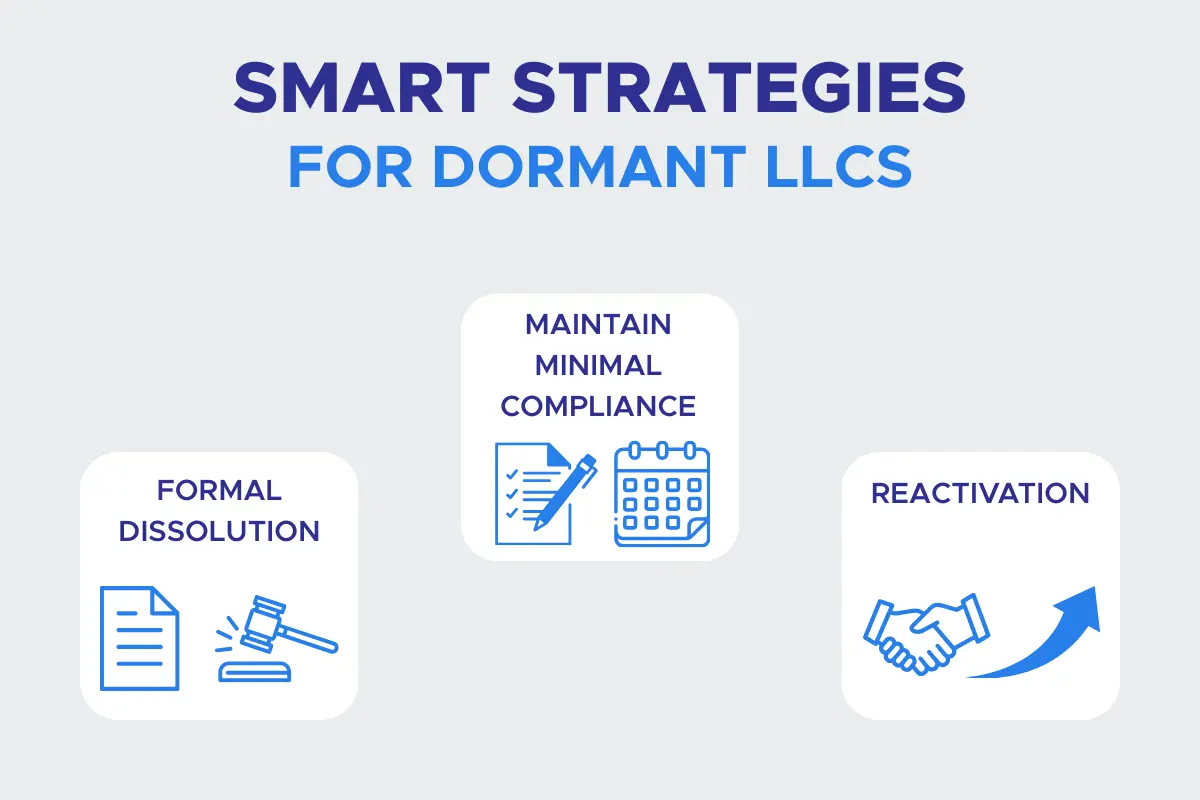
Smart Strategies for Managing a Dormant LLC
Option 1: Maintain Minimal Compliance
Keep your LLC remains compliant by filing required income tax returns with zero income, maintaining your registered agent, and paying annual fees. This works when you plan to reactivate eventually or need the structure for asset protection purposes.
File tax returns showing no activity rather than skipping filings entirely. Whether you file a federal tax return or just state forms depends on your specific tax classification and state requirements.
Option 2: Formal Dissolution
LLC dissolution eliminates ongoing obligations permanently. The dissolution process involves filing articles of dissolution, distributing remaining assets to LLC members, and filing final tax returns with both federal and state authorities. You’ll need to settle debts and outstanding debts before completion.
Consider dissolution when annual costs exceed benefits, especially in high-cost states where maintaining dormant entities becomes expensive compared to future reactivation costs.
Option 3: Conversion or Sale
Converting to different entity types like sole proprietorship or C corporation might offer advantages depending on your situation. Selling your LLC to other entrepreneurs is possible, though the market for dormant businesses is limited unless there’s established credit history or valuable business licenses attached.
State-by-State Considerations for Inactive LLCs
High-Maintenance States
California tops the list with its $800 annual franchise tax plus additional filing fees, regardless of the LLC’s income level. New York requires expensive publication notices and ongoing compliance. Delaware charges annual franchise taxes and requires annual reports, though costs are lower than California.
These states make dormancy expensive compared to business-friendly jurisdictions, affecting decisions about whether to maintain or dissolve inactive entities.
Business-Friendly States for Dormant LLCs
Wyoming offers low costs for maintaining dormant LLCs with minimal annual fees and no state income tax or Medicare taxes. Nevada provides reasonable maintenance costs without state income tax burdens. Texas offers advantages with no Medicare taxes or state income tax, making long-term dormancy more affordable.
Professional Guidance: When to Get Help
DIY vs. Professional Assistance
Simple dormancy situations are manageable yourself if your LLC remains compliant and you just need to file personal tax returns showing zero activity. Basic tax filing requirements for inactive LLCs often involve straightforward forms.
Complex scenarios require professional help – multi-state compliance, significant back taxes, asset protection concerns, or business succession planning involving multiple LLC members with different tax classification needs.
Red Flags That Require Expert Help
Multi-state compliance issues, significant penalties, or questions about beneficial ownership information and initial BOI report requirements need expert guidance. Complex tax classification issues, especially when dealing with how an LLC taxed differs between federal and state levels, benefit from professional assistance.
Issues involving personal liability exposure, business debts, or problems with inactive corporations in your business structure also warrant professional consultation.
FAQs
Can I just ignore my unused LLC?
No, ignoring your unused LLC is risky. As UpCounsel warns: “Failing to close an inactive LLC properly can result in fines, fees, and potential personal liability for unpaid taxes.” Even dormant LLCs have ongoing obligations like annual reports and franchise taxes that continue regardless of business activities.
Ignoring these obligations can result in administrative dissolution, loss of limited liability protection, and potential personal liability for business debts.
What happens if I don’t file taxes for my dormant LLC?
Failing to file required tax returns triggers significant penalties, even with no income. The IRS charges penalties for late partnership returns of $200+ per partner per month. States may also impose penalties for missed franchise tax returns, and continued non-compliance can lead to administrative dissolution affecting your personal assets.
How much does it cost to maintain an inactive LLC annually?
Annual costs vary dramatically by state tax requirements and filing fees. Business-friendly states might cost $100-200 annually for basic compliance. High-cost states like California expect $800-1,000+ due to franchise taxes and fees, making the decision to maintain or dissolve an important financial consideration.
Can I reactivate my LLC after several years of dormancy?
Yes, reactivating is usually possible if your LLC maintained good standing during dormancy. If administratively dissolved, you’ll need reinstatement procedures involving paying back taxes, outstanding fees, and filing required paperwork to restore active status and legal protections.
Will my dormant LLC be automatically dissolved?
Some states automatically dissolve LLCs that fall behind on filings or franchise tax payments after 2-3 years of non-compliance. However, maintaining minimal compliance by filing annual reports and meeting tax filing requirements prevents unwanted dissolution and preserves your separate entity status.
Conclusion: Making the Right Choice for Your Dormant LLC
Managing an inactive LLC requires informed decisions based on your state’s requirements, future plans, and compliance burden. If planning to reactivate or needing the structure for asset protection, maintain minimal compliance through regular filings and fee payments. If certain the business won’t restart and costs exceed benefits, formal dissolution eliminates ongoing obligations.
Remember that “do you have to file taxes on an unused LLC” isn’t always simple. Requirements depend on your situation, state laws, and how you’ve handled dormancy. When in doubt, err on the side of filing rather than ignoring potential requirements that could affect your personal liability or legal status.
Our team specializes in helping business owners navigate dormant LLC decisions, from maintaining compliance to complex reinstatements to strategic dissolutions. Whether you need help understanding current obligations, catching up on missed filings, or planning the best path forward, we provide expert guidance that protects your interests and minimizes costs.
Contact our experienced team today for personalized guidance on your specific situation. We’ll help you understand exactly what your inactive LLC needs – whether minimal maintenance, formal dissolution, or preparation for reactivation.