

Inactive LLC Tax Obligations & Hidden Costs in 2025
Ever set up an LLC and wondered what happens if you let it go quiet for a while?
Picture this: You started an LLC for that brilliant business idea three years ago. Life got busy, the project stalled, and now your company is basically taking a long nap. You’re probably thinking “out of sight, out of mind,” right?
Wrong. That sleeping LLC could be costing you money every single month.
We see this scenario constantly. Entrepreneurs launch LLCs with big dreams, then life happens. Maybe the business never took off, or you pivoted to something else. But here’s what most people don’t realize: an inactive LLC doesn’t just disappear. It sits there, quietly racking up fees and penalties while you’re not paying attention.

Key Takeaways
Even if your LLC isn’t actively conducting business, you’re still on the hook for compliance. Most states still require inactive LLCs to file annual reports and/or pay franchise taxes—even if your business had zero income or activity. Business owners must file taxes and filing annual reports to avoid costly penalties.
Ignoring your LLC’s tax obligations can lead to administrative dissolution by the state, which may result in the loss of your business entity’s legal protections and additional fees.
Understanding the difference between a dormant and inactive LLC is essential—both can trigger ongoing requirements, but only a formally dissolved LLC is free from future state and federal obligations.
What Does “Inactive LLC” Mean?
When people ask “what does it mean if an LLC is inactive,” they’re usually dealing with one of two situations. Either their inactive LLC has been marked inactive by the state, or they’re wondering about a legal entity that isn’t conducting business.
An inactive LLC meaning comes down to status with your state government. Most states track whether your business entity is “active” or “inactive” based on compliance with annual requirements. Miss your annual report deadline or stop paying franchise taxes, and your state might mark your inactive LLC as inactive.
As LegalZoom’s compliance attorneys explain, “Most businesses—whether structured as an LLC, corporation, nonprofit, or DBA—must stay in compliance to remain in good standing with the government. For LLCs, compliance refers to ongoing legal obligations such as state and federal filings, as well as licensing and regulatory requirements at the local, state, and federal levels. Failure to meet these requirements can result in fines, penalties, suspension, or even possible closure.”
Sometimes people use “inactive” to describe any business entity that isn’t actively conducting business. You might have an inactive LLC that’s current with the state but hasn’t made a sale in months. Technically, that’s a dormant LLC, not an inactive LLC. Both must still meet legal state or IRS obligations.
Common Reasons Your LLC Is Inactive
So why is your inactive LLC inactive? The most common culprit is forgetting annual reports. Every state requires LLCs to check in periodically, usually once a year. Miss that deadline, and you’re on the path to inactive LLC status.
Skipping tax filing requirements or fees is another fast track to problems. Many states charge franchise taxes or fees. Even if your inactive LLC made zero dollars, you might still owe these payments. Only a formal dissolution with the state relieves these compliance burdens.
Dormant vs. Inactive LLC—What’s the Difference?
Think of it this way: a dormant LLC is like a car parked in your garage with current registration. It’s not being driven, but it’s legal and ready to go. An inactive LLC is like that same car with expired plates—you can’t legally drive it until you fix the paperwork.
A dormant LLC stays current with state filings but isn’t actively conducting business. An inactive LLC has fallen out of compliance with state requirements and is subject to mounting penalties or dissolution.
Beneficial Ownership Information (BOI) Reporting: Current Status for LLCs
As of March 2025, the Financial Crimes Enforcement Network (FinCEN) has removed the requirement for U.S. companies—including inactive LLCs and corporations—to report BOI under the Corporate Transparency Act. All entities formed in the United States, whether active or inactive, are now exempt from BOI reporting. Only certain foreign companies that register to do business in the U.S. are required to submit BOI reports, and these reports do not include information about U.S. persons as beneficial owners.
Penalties for failing to file BOI reports do not apply to domestic companies or their beneficial owners under the current rules.
How Long Can an LLC Stay Inactive?
The answer depends entirely on your state and what caused the inactive LLC status.
Most states eventually dissolve LLCs that remain inactive too long through administrative dissolution. Here’s what we typically see:
- 1-6 months: Late fees and penalties start adding up
- 6-12 months: Some states begin warning about potential administrative dissolution
- 1-3 years: Administrative dissolution becomes likely
- 3+ years: Your inactive LLC might be permanently administratively dissolved
The key point? The longer your inactive LLC stays inactive, the more expensive it becomes to fix.
Does an Inactive LLC Have to File Taxes?
This is the million-dollar question we hear constantly: “Do you have to file taxes on an unused LLC?”
The short answer? Usually, yes.
The Internal Revenue Service generally expects an inactive LLC to file a federal return that reflects zero activity if the LLC still exists, regardless of revenue. Even if you made zero revenue, you might still need to file tax returns.
Federal tax requirements: All LLCs must file tax returns annually, regardless of activity. A single member LLC is typically treated as a disregarded entity for federal tax purposes, requiring the owner to file Schedule C on their personal tax returns unless the LLC has elected to be taxed as a C-corp or S-corp.
Multi-member LLCs are taxed as partnerships and must file a corporate tax return using Form 1065. The LLC’s tax classification determines which tax return your inactive LLC must file, but a federal return is required as long as the LLC remains legally formed.
Income tax obligations: Most states require an annual filing or tax even if there is no activity; failure leads to fines and potential dissolution.
Franchise taxes: Many states charge these annual fees whether your inactive LLC made money or is an active business.
Can an Inactive LLC or Corporation Conduct Business?
The question “can an inactive LLC conduct business” comes up often, and the answer isn’t encouraging.
Generally speaking, an inactive LLC shouldn’t conduct business until it’s back in good standing with the state. Operating while inactive can create serious legal and tax complications that affect your business reputation.
Here’s why it’s risky:
Personal liability protection might disappear. If your inactive LLC isn’t current with state requirements, you could lose the legal protections that separate your personal assets from business debts.
Contracts might be unenforceable. Some states won’t enforce contracts signed by dissolved or inactive corporations and LLCs.
Banking problems arise quickly. Banks regularly check business entity status. An inactive LLC might have trouble opening bank accounts or maintaining existing ones.

How to Reactivate or Dissolve an Inactive LLC
When you discover your inactive LLC is inactive, you have three main options: reactivate it, dissolve it through the dissolution process, or sometimes convert it to a different business structure.

Reactivating your inactive LLC usually involves:
- Filing annual reports and any missing documents
- Paying accumulated fees and filing fees
- Bringing tax filing requirements current
- Maintaining a registered agent if needed
- Submitting reinstatement paperwork to your state
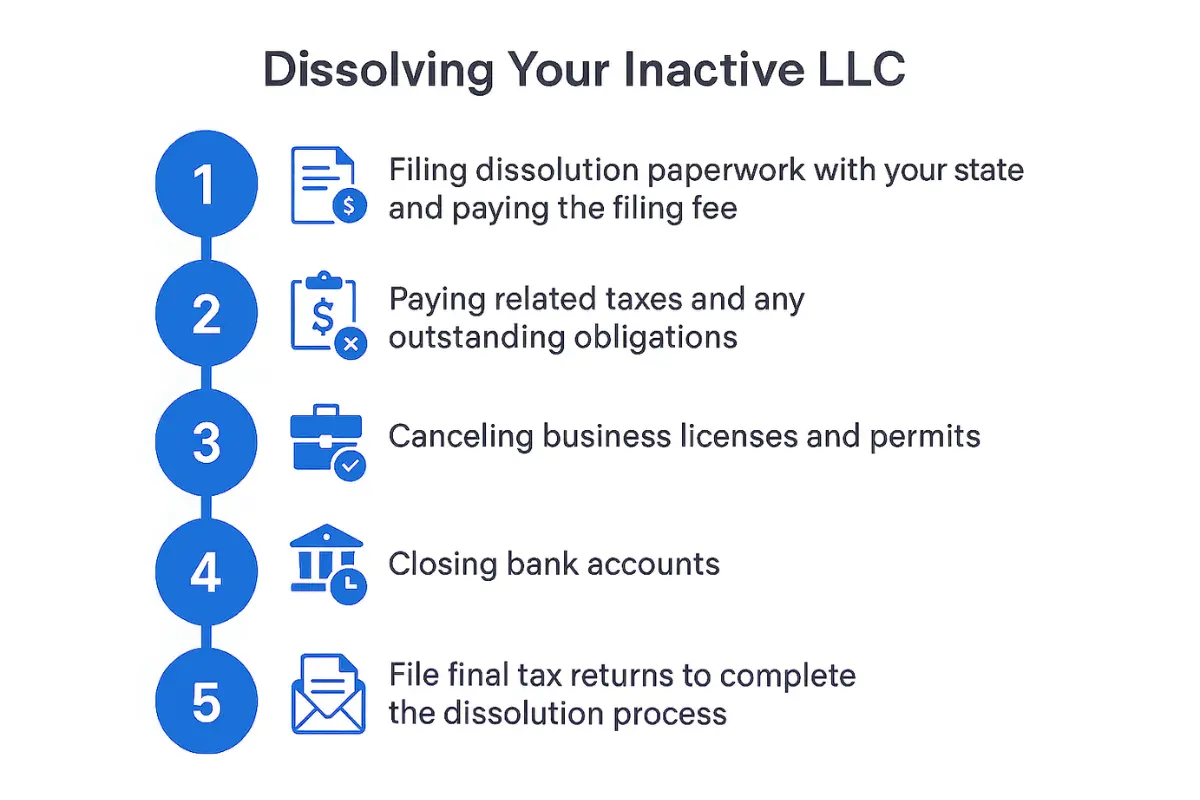
Dissolving your inactive LLC requires following the formal dissolution process:
- Filing dissolution paperwork with your state and paying the filing fee
- Paying related taxes and any outstanding obligations
- Canceling business licenses and permits
- Closing bank accounts
- File final tax returns to complete the dissolution process
Here’s the thing that many business owners don’t realize: as the attorneys at Imani Law Firm point out, “By properly dissolving or terminating your LLC, you avoid all the unnecessary taxes, fees, and headaches that come from doing nothing.” Sometimes dissolution is actually the smartest financial move.
We handle inactive LLC situations regularly. What looks complicated to business owners is routine for us.
Conclusion
Every inactive LLC needs attention, even the ones catching dust on the shelf. Your inactive LLC status isn’t going to fix itself, and ignoring it only makes problems worse.
Whether your inactive LLC is technically inactive with the state or just dormant from lack of business activities, you’ve got decisions to make. Will you reactivate and get back to conducting business? Dissolve it properly and move on? Or let it continue accumulating fees and penalties?
The choice is yours, but the clock is ticking. State penalties and tax obligations don’t pause while you’re deciding.
FAQs
What does “inactive LLC” mean for my business?
Inactive LLC status usually means your business entity isn’t compliant with state requirements. This could involve missed annual reports, unpaid franchise taxes, or failure to maintain a registered agent.
Do I still have to file taxes if my LLC is dormant?
Generally, yes. Even dormant LLCs typically have federal tax obligations. The Internal Revenue Service requires you to file tax returns for your inactive LLC regardless of business activities.
Is it legal to run a business with an inactive LLC?
We strongly advise against conducting business with an inactive LLC. Operating while out of compliance can jeopardize your personal liability protection and create unenforceable contracts.
How do I make my LLC active again?
Reactivating an inactive LLC usually requires filing annual reports, paying accumulated fees and penalties, bringing tax filing requirements current, and submitting reinstatement documents to your state.
What are the risks of leaving my company inactive too long?
Long-term inactive LLC status can lead to administrative dissolution, accumulated penalties, loss of personal liability protection, banking problems, and complex tax obligations.
Can I dissolve an LLC myself or should I get professional help?
While you can handle the dissolution process yourself, professional help ensures you meet all requirements and avoid future problems.
Simplifying LLC Compliance—Leave It to Us!
Ready to reactivate—or officially shut the door on—your inactive LLC?
We handle inactive LLC situations every day. Whether you need reinstatement, dissolution, or just want to understand your options, our team knows exactly what your state requires and how to get it done efficiently.
Save time, sidestep stress, and let our experts handle the paperwork. Getting your inactive LLC back in good standing (or winding things down the right way) is just a click away. Contact us today and let’s get your business situation sorted out properly.