

Can the Business Owner Be the Registered Agent? Pros and Cons Explained
What if the single decision to save $100 annually could permanently expose your home address to the public, risk missed legal notices, and create uncomfortable situations when legal documents are delivered to your doorstep?
This guide explains whether a business owner can legally serve as their own registered agent, outlines the pros and cons, and helps you decide which option best supports long-term compliance and privacy.
Many new LLC owners don’t realize that choosing to be their own registered agent, while technically legal, can create privacy, availability, and compliance challenges that are often underestimated.
Understanding what registered agents do, why business owners face unique risks when serving in this role, and when professional services may offer better protection helps you make an informed decision for your specific situation.
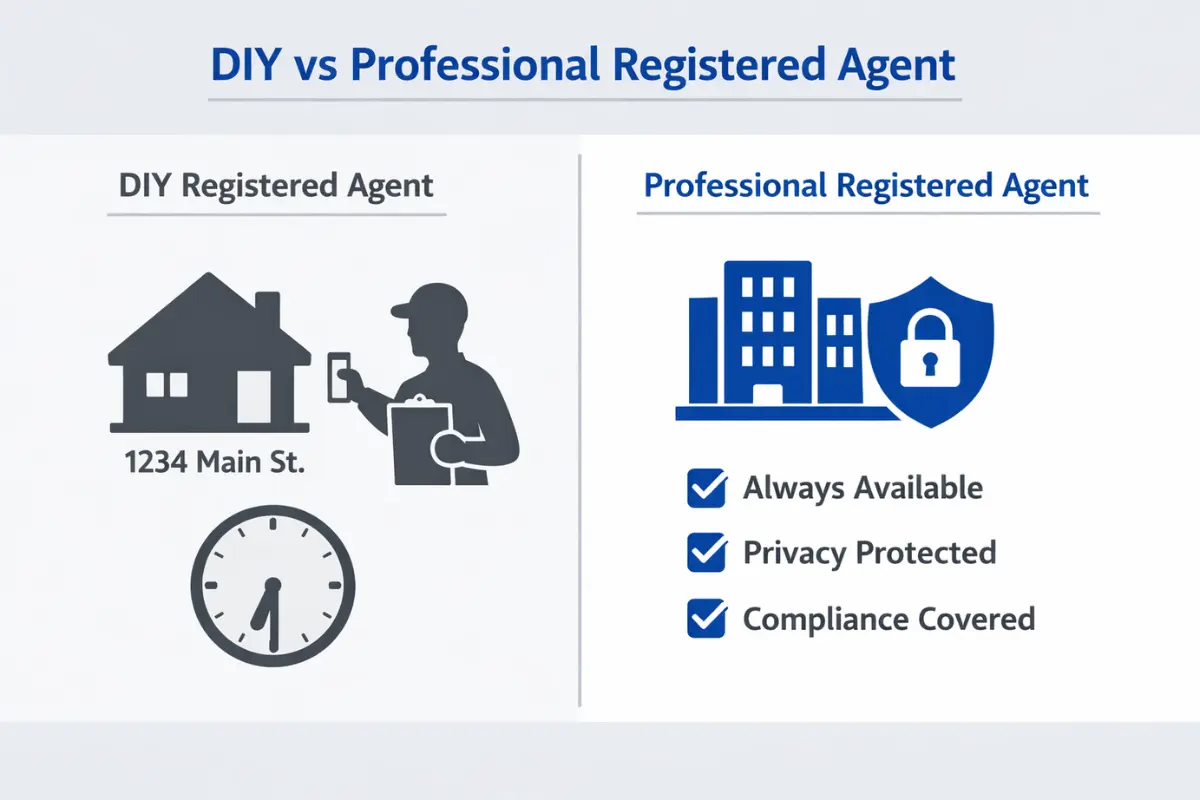
Key Takeaways
- Business owners can legally serve as their own registered agent, but this creates privacy, availability, and compliance challenges most entrepreneurs underestimate.
- Your registered agent’s address becomes public record, exposing your home address to competitors, solicitors, and anyone searching state databases.
- Registered agents must be available during business hours to receive legal documents, which can be problematic when traveling or working off-site.
- Professional services cost around $99 annually, helping reduce privacy risks and supporting compliance.
What is a Registered Agent?
A registered agent is the person or entity designated to receive official legal documents and government correspondence on behalf of your LLC or corporation.
According to the U.S. Small Business Administration, “Most states require businesses to designate a registered agent to receive legal documents and official government correspondence”.
Think of your registered agent as your business’s official point of contact with the state. When the government needs to reach your company, they deliver physical documents to your registered agent’s address during business hours.
Role and Responsibilities
Your registered agent handles several critical functions:
Receiving legal documents: When your LLC faces a lawsuit, your registered agent receives the service of process. Missing these documents can result in default judgments against your business.
Accepting government correspondence: State agencies send annual report reminders, tax notices, and compliance deadlines to your registered agent.
Maintaining availability: Registered agents must be available during normal business hours (typically 9 AM to 5 PM) to accept documents in person.
Providing a physical address: The registered agent must have a physical street address in the state where your business is registered. P.O. boxes don’t qualify.
Can I Be My Own Registered Agent for My LLC?
Legal Framework
Yes, business owners can legally serve as their own registered agent. The fundamental requirement is simple: the registered agent must be a person or entity with a physical address in the state where the LLC is formed.
If you live in the same state where your LLC is registered and you’re available during business hours, you meet the basic legal qualifications.
However, “can you” and “should you” are entirely different questions.
State-Specific Regulations
Your registered agent must maintain a physical street address in the state of formation. You cannot use a P.O. box, and the address must be where someone is available during business hours.
If you operate in multiple states through foreign qualification, you need a registered agent in each state. Serving as your own agent becomes impossible if you don’t maintain physical addresses in all operating states.
Pros of Being Your Own Registered Agent as a Business Owner
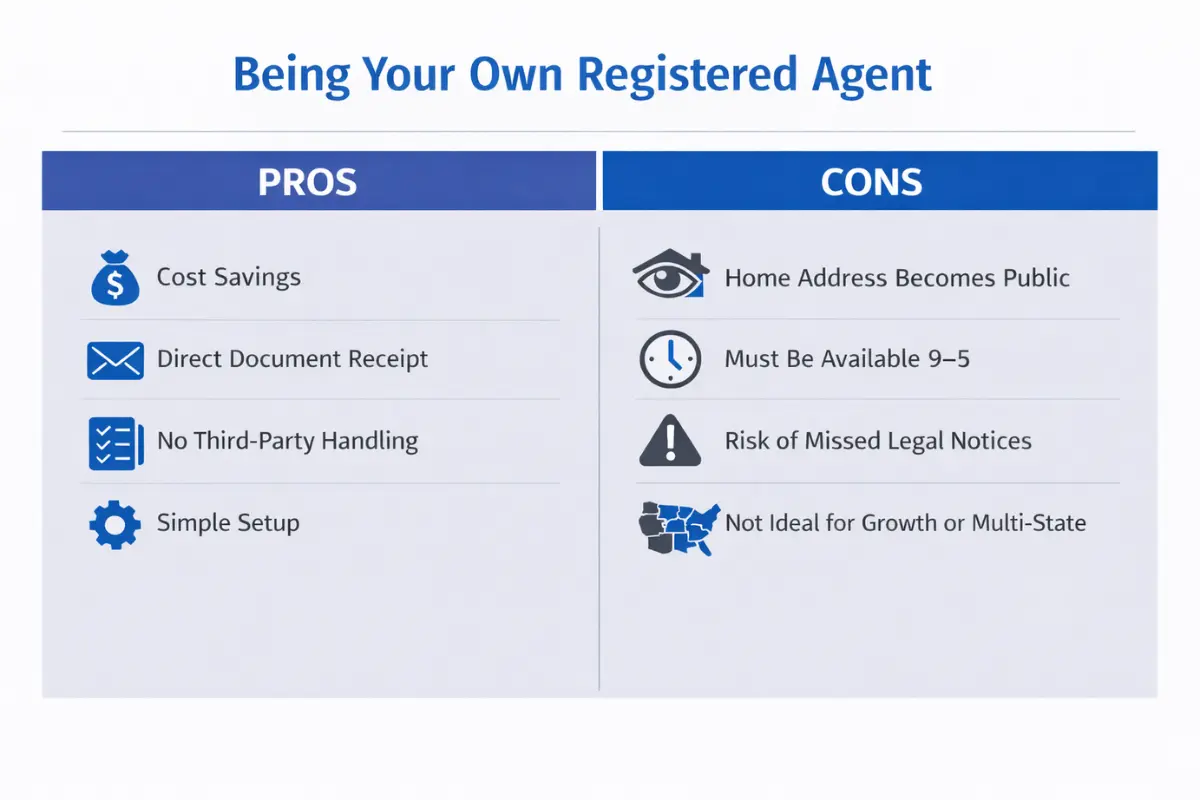
Cost Savings
The most obvious advantage is avoiding annual service fees. Professional registered agent services typically charge between $99 and $300 annually.
For brand-new entrepreneurs testing business concepts with minimal revenue, eliminating this expense can feel appealing.
Control Over Documentation
When you serve as your own registered agent, you receive legal documents and government notices directly without intermediaries. This direct control means you immediately know when your LLC receives important correspondence.
Cons of Being Your Own Registered Agent for an LLC
Privacy Concerns
Your registered agent’s address becomes part of your LLC’s public record, available to anyone who searches your state’s business database.
When you list yourself as the registered agent using your home address, you’re permanently publishing your personal address in public records accessible to competitors, solicitors, marketers, customers, and anyone with internet access.
According to SCORE, “Serving as your own registered agent may save money, but it also requires consistent availability during business hours and comfort with public disclosure of your address”.
Real-world example: Jennifer formed her consulting LLC and listed herself as registered agent using her home address. Within months, she started receiving unsolicited visits from vendors showing up at her front door. The situation became even more awkward when potential clients researched her company online, found her registered agent address in public records, and realized her “professional consulting business” operated from a residential home.
Potential for Missed Notices
Registered agents must be available during standard business hours to receive legal documents. This creates problems when business owners serve as their own agent.
When you travel for business or vacation, you’re not available at your registered agent address. If legal documents arrive during your absence, they might be missed entirely.
Missing legal notices carries serious consequences. Lawsuits can proceed to default judgment if you don’t respond to service of process, your LLC can be administratively dissolved if you miss annual report deadlines, and tax penalties can accumulate.
Real-world example: Marcus served as his own registered agent while running a landscaping business. When a client filed a lawsuit over alleged property damage, the process server arrived at Marcus’s home on a Tuesday afternoon while he was across town managing his crew. The legal documents sat unnoticed on his doorstep until he returned home that evening. By the time Marcus realized what had happened and contacted an attorney, he had already lost two critical days of his response deadline, leaving him scrambling to prepare his defense under extreme time pressure.
When your business faces a lawsuit, process servers deliver legal documents to your home. This means they can appear during family dinners, neighborhood gatherings, or when clients are visiting.
Alternatives to Serving as Your Own Registered Agent
Registered Agent Services
Professional registered agent services eliminate the privacy, availability, and compliance challenges of serving as your own agent. These services typically cost between $99 and $300 annually.
Quality services offer physical addresses in all 50 states, guaranteed availability, immediate digital notifications, online document access, and compliance reminders.
Involving a Third Party
Some business owners use trusted individuals as registered agents, such as business attorneys, accountants, business partners, or family members.
While these arrangements can work, they require the third party to meet all state requirements and maintain long-term availability. For most businesses, professional registered agent services provide more reliability.
Why Using a Professional Registered Agent Service Is the Smarter Choice
Protects Your Privacy and Home Address
Professional registered agent services use their business address as your public registered agent address. This keeps your home address completely private and out of state business databases.
Availability During Business Hours
Registered agent services maintain staff specifically dedicated to receiving legal documents during business hours. They don’t take vacations or miss deliveries. This guaranteed availability means you never risk missing critical legal notices.
Reduces the Risk of Missed Legal Notices
Professional services have systems designed to receive, process, and notify you immediately when documents arrive. Most services offer email notifications, digital scanning and online access, and tracking systems that help prevent important items from being lost.
Simplifies Ongoing Compliance
Many registered agent services offer compliance calendars and deadline reminders. They track your annual report deadlines, filing requirements, and renewal dates, helping your LLC stay in good standing.
Supports Business Growth and Multi-State Expansion
If you expand into multiple states, you need registered agents in each state. Professional services can serve as your agent across all states where you operate. Trying to serve as your own agent becomes impossible when operating in states where you don’t maintain a physical presence.
Saves Time So You Can Focus on Running Your Business
The time you spend managing registered agent responsibilities is time you’re not spending on revenue-generating activities. Professional services handle these administrative obligations completely, freeing you to focus on growing your business.
Is the Registered Agent of an LLC the Owner?
Clarifying Ownership vs. Registration
The registered agent and LLC owner are not the same role, even though one person can serve both functions.
LLC owners (called members) have ownership stakes in the company and make business decisions. Registered agents simply receive legal documents on behalf of the LLC. They have no ownership rights or decision-making authority based solely on their registered agent status.
Can a Registered Agent Be the Owner?
Yes, an LLC owner can serve as the registered agent for their own company, assuming they meet state requirements. However, the registered agent can also be a professional registered agent service or a third-party individual like an attorney.
Many LLCs choose to separate these roles, with owners focusing on business operations while professional services handle registered agent responsibilities.
Conclusion
Final Thoughts on Being Your Own Registered Agent
Can the business owner be the registered agent? Absolutely, it’s legal and done by many entrepreneurs.
Should you be your own registered agent? That depends on your situation, risk tolerance, and priorities.
For brand-new solo ventures, serving as your own agent might make sense temporarily. However, most established businesses discover that professional registered agent services provide protection and peace of mind that far exceed their modest cost.
The decision comes down to whether saving $99 annually is worth the privacy exposure, missed notice risks, and administrative burden.
How a Professional Registered Agent Service Can Help
Our registered agent service helps reduce privacy concerns, compliance risks, and administrative burdens. For $99 annually, we provide privacy protection, access to a professionally staffed office during regular business hours, immediate digital notifications when documents arrive, and professional compliance support.
We handle the administrative complexity so you can focus on running your business with confidence. Contact us today to learn how our professional registered agent services can protect your privacy and help keep your LLC in good standing.
Frequently Asked Questions
Yes, if you meet state requirements: maintaining a physical street address in your LLC's formation state and being available during business hours. However, this exposes your home address in public records.
Permanent public disclosure of your home address, risk of missed legal notices when traveling, potential for embarrassing process server encounters, and administrative burden.
Professional services typically range from $99 to $300 annually. Quality services include guaranteed availability, digital document access, compliance reminders, and privacy protection.
No, your registered agent must maintain a physical street address in the same state where your LLC is formed.
No, these are separate roles. The registered agent receives legal documents but has no ownership rights. LLC owners can serve as registered agents, but these remain distinct functions.
All three terms—registered agent, resident agent, and statutory agent—mean the same thing: a person or business authorized to receive legal and official documents for your company. States use different names, but the role's requirements are essentially the same: the agent must have a physical address in the state, be available during business hours, and handle documents promptly to keep your business in good standing.
Yes, a friend or family member can legally provide registered agent services if they meet your state's registered agent requirements. The same person must have a physical address (not a mailing address) in your state, be available during standard business hours to accept legal documents and tax forms, and be comfortable having their address listed publicly in state records.
However, this arrangement creates potential risks. If your family member moves, becomes unavailable, or experiences life changes, you'll need to update your registered agent information with the secretary of state quickly to avoid missing important notices. Many registered agent services offer more reliability and consistency than informal arrangements with friends or family, ensuring your LLC paperwork and official documents are handled professionally.
Your registered agent, business, and principal office addresses serve different purposes. The registered agent address is for receiving legal documents and is publicly listed. The principal office address is where you run your business, and the business address may be where you meet clients or operate. You can use one address for all three, but many small business owners use a registered agent service to keep their home address private and separate from public records.
While being your own registered agent eliminates the annual service fee (typically $99–$300), it rarely saves money in the long run when you consider the real costs. Professional registered agent services protect you from potential risks such as default judgments from missed service of process, administrative dissolution due to overlooked annual report deadlines, and penalties from missing important documents sent by certified mail.
They also spare you from junk mail, unexpected process server visits, and the time spent managing official notices during normal business hours. Many registered agent services provide strong customer support and deliver documents digitally so you receive important mail right away. The value of privacy protection alone, by keeping your home address out of state records, often justifies the expense. Most businesses find that using a registered agent service saves money by preventing costly compliance errors and freeing up time for revenue-generating work.
Yes, if your business operates in multiple states, you need a separate registered agent in each state where your LLC is registered or qualified to do business. State laws require every business entity to maintain a registered agent with a physical street address in that specific state. This is where both a registered agent service and being your own agent becomes complicated, because you would need to maintain physical locations in every state, which is impractical for most business owners.
Professional registered agent services solve this by providing coverage across all states where you operate, ensuring you can accept service of legal documents and maintain accurate records in each jurisdiction. This multi-state support is essential as your company grows beyond your home state, helping you remain in good standing and satisfy legal requirements everywhere you do business.