

Register as a Foreign Entity: Step-by-Step Guide to Foreign Qualification
You’ve built a thriving business in your home state. Now customers in other states are calling. Opportunity is knocking. But before you start doing business across state lines, there’s an important legal step you can’t skip: you may need to register as a foreign entity in each new state where you operate.
In this guide, we’ll walk you through exactly what foreign entity registration means, when it’s required, how to do it, and what it costs. Whether you’re a small business owner just starting to expand or a multi-state operator trying to stay compliant, this guide covers everything you need to know.
Key Takeaways
- Registering as a foreign entity means getting legal permission to operate your existing business in a new state.
- You are required to foreign qualify when you are actively “doing business” in another state.
- The process involves obtaining a Certificate of Good Standing and appointing a registered agent in the new state.
- Filing fees typically range from $50 to $500+ depending on the state.
- Failing to register can result in fines, back fees, and the inability to enforce contracts.
What Does It Mean to Register as a Foreign Entity?
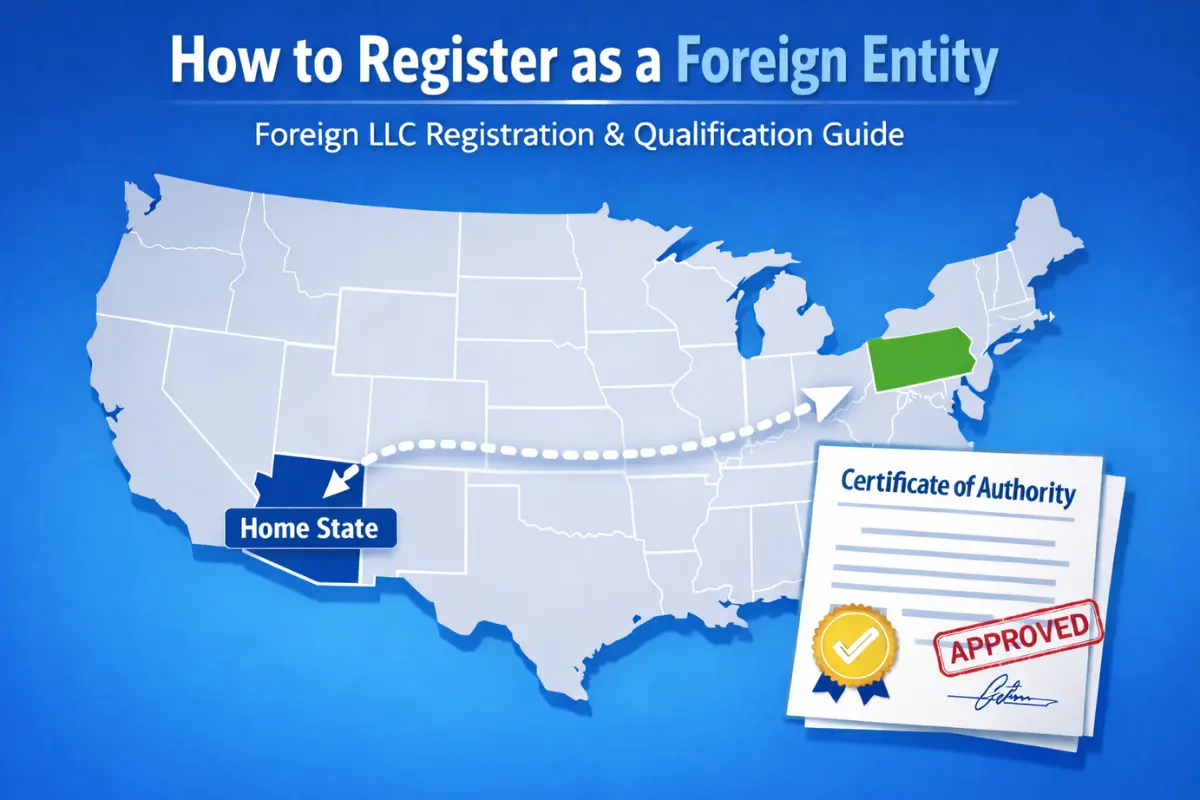
The word “foreign” here has nothing to do with other countries. In legal terms, a foreign business is simply one that was formed in a different state than where it wants to operate. If your LLC was formed in Texas and you want to open an office in Florida, your Texas LLC is a “foreign” entity in Florida.
Foreign entity registration (often called foreign qualification) is the process an existing LLC, corporation, or other formal business entity uses to obtain authority to transact business in a state other than its formation state. This process typically involves filing specific forms with the new state and paying required fees, but it does not create a new legal entity; instead, it authorizes the same entity to operate in that additional state while it remains organized under its original state’s laws.
These foreign registration requirements generally apply to corporations, LLCs, and certain other registered business entities, although the exact rules and what counts as “doing business” can vary by state.
When Is Foreign LLC Registration Required?
The U.S. Small Business Administration explains that if your business conducts activities in more than one state, you might need to form it in one state and then register it in the other state(s) where you operate. The exact point at which registration becomes necessary depends on each state’s definition of “doing business,” which is set out in that state’s statutes and regulations.
What Counts as “Doing Business” in Another State?
Each state defines “doing business” a little differently, but several common patterns show up across many states. You may be considered to be doing business in another state if, for example:
- You have employees regularly working in that state.
- You maintain a physical office, warehouse, storefront, or other fixed place of business there.
- You regularly enter into contracts in that state or provide ongoing services there, rather than just occasional or one‑off transactions.
- You generate substantial, continuing revenue from customers located in that state, especially when combined with other ongoing activities.
If one or more of these situations applies, you may need to complete foreign LLC registration (or foreign qualification) in that state, though the final answer always depends on that state’s specific rules.
When Registration May Not Be Required
Not every business activity triggers foreign qualification. Generally, you may not need to register if you’re only making isolated sales, attending trade shows, or holding internal corporate meetings in another state. That said, the rules vary widely, so when in doubt, it’s worth consulting a professional before assuming you’re in the clear.
How to Register as a Foreign Entity (Step-by-Step Guide)
The SBA explains that to foreign qualify, you typically need to “file a Certificate of Authority. Many states also require a Certificate of Good Standing from your state of formation. Each state charges a filing fee, but the amount varies by location and business structure.” Here’s how the process works from start to finish.
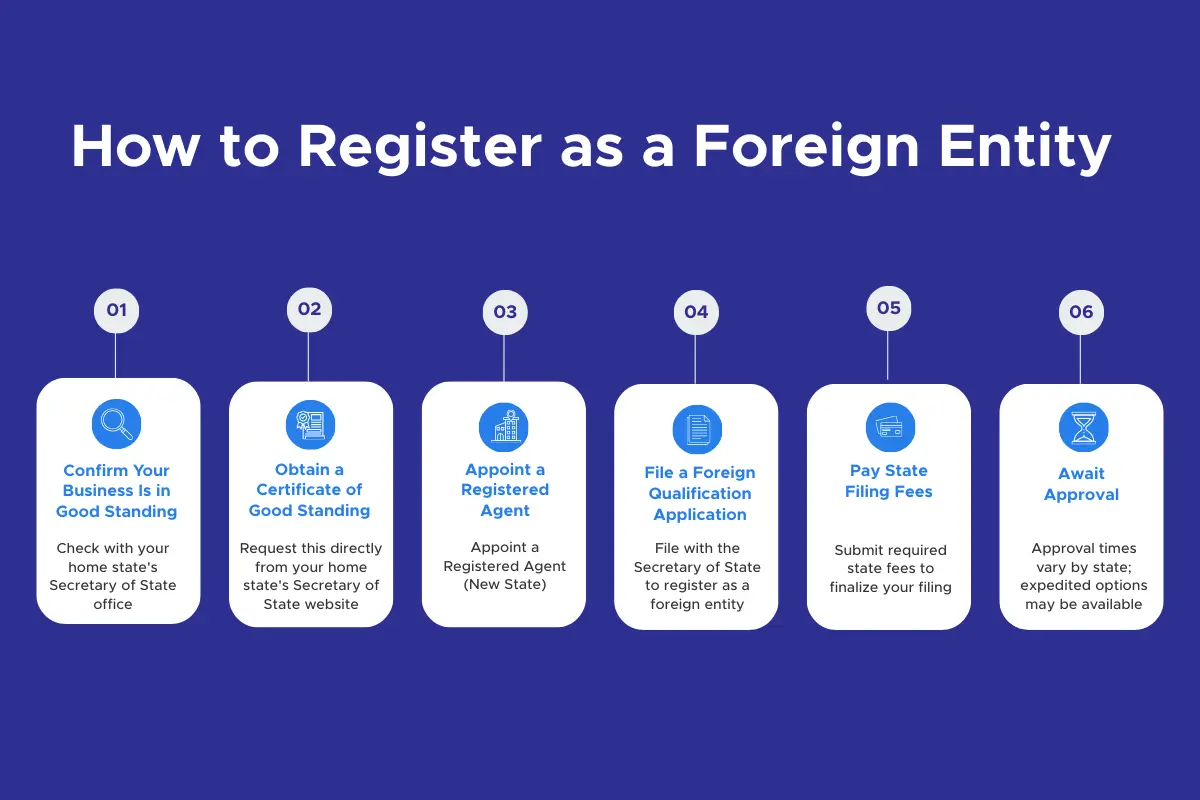
Step 1: Confirm Your Business Is in Good Standing
Before you can register anywhere new, your business must be in good standing in its home state. That means all annual reports are filed, fees are paid, and no compliance issues are outstanding. If you’re not sure, check with your home state’s Secretary of State office.
Step 2: Obtain a Certificate of Good Standing
Most states require a Certificate of Good Standing (sometimes called a Certificate of Existence) from your home state as part of the foreign business registration process. You can typically request this directly from your home state’s Secretary of State website. Fees usually range from $10 to $50.
Step 3: Appoint a Registered Agent
You’ll need a registered agent with a physical address in the new state, someone who can receive legal and government documents on your behalf. This is a requirement in every state. DoMyLLC offers registered agent services nationwide, so this step is easy to handle.
Step 4: File a Foreign Qualification Application
This is the core of registering as a foreign entity. You’ll submit a Certificate of Authority (or similar application, depending on the state) to the new state’s Secretary of State. Most states allow online filing, which is faster than mail.
Step 5: Pay State Filing Fees
Each state charges its own fee. We’ll cover costs in more detail in the next section, but plan for anywhere between $50 and $500 or more depending on your business structure and the state.
Step 6: Await Approval
Processing times vary. Some states approve foreign qualifications in a few days; others take several weeks. Rush or expedited processing is available in many states for an additional fee.
h2 style=”font-weight: 600; font-size: 34px; color: #3b5ec3;”>How Much Does It Cost to Register as a Foreign Entity?
The foreign LLC registration cost and cost to file a foreign qualification vary significantly from state to state. Here’s a general breakdown of what to expect:
- State filing fees: $50–$500+ (varies widely by state and entity type)
- Certificate of Good Standing from home state: $10–$50
- Registered agent fees: $50–$300/year depending on the provider
- Ongoing compliance costs: Annual report fees in the new state, which vary by location
Some states like Kentucky and Colorado are on the lower end of the fee spectrum. Others like Massachusetts and Texas charge considerably more. Always check the specific state’s Secretary of State website for the most current fee schedule.
How Long Does Foreign Entity Registration Take?
Processing times depend on the state and how you file. Online filings are almost always faster than mail submissions. Here’s what to expect:
- Fastest states (online): 1–3 business days
- Average processing time: 1–3 weeks
- Slower states or mail filings: 4–6 weeks
- Expedited processing: Available in most states for an extra fee, often cutting the wait to 24–72 hours
If you’re in a hurry to start operations in a new state, expedited filing is usually worth the extra cost.
Benefits of Foreign Business Registration
Beyond just staying legal, registering as a foreign entity comes with several real advantages:
- Legal compliance: You can operate without fear of penalties or forced shutdowns.
- Ability to sue in that state: Unregistered foreign businesses often can’t file lawsuits or enforce contracts in that state’s courts.
- Business banking: Many banks require proof of registration before opening a business account in a new state.
- Tax compliance: Registration ensures you’re properly set up to pay state taxes where you operate, helping you avoid back taxes and penalties.
Risks of Not Registering as a Foreign Entity
Skipping foreign entity registration isn’t just a technicality; it can cause real damage to your business. Here’s what you’re risking:
- Fines and penalties: States can impose fines for operating without registration, sometimes retroactively.
- Back fees: You may owe filing fees and back taxes for every year you operated without registering.
- Loss of good standing: Operating illegally in a state can affect your standing in your home state as well.
- Inability to enforce contracts: Many states won’t let an unregistered foreign business use their court system to collect on contracts or sue for damages.
The cost of registering is almost always far less than the cost of getting caught without registration.
How to Register My LLC as a Foreign Entity
If you’re wondering how to register your LLC as a foreign entity specifically, the process follows the same steps outlined above, but there are a few LLC-specific things to keep in mind:
- Review your operating agreement to ensure multi-state operations are allowed and that your management structure is clearly defined.
- Single-member LLCs and multi-member LLCs both qualify for foreign registration, though documentation requirements may differ slightly.
- Some states may ask for a copy of your operating agreement during the application process.
The good news is that your LLC’s tax classification (sole proprietorship, partnership, S-Corp, or C-Corp) doesn’t change just because you’ve registered in a new state. Your existing structure carries over.
Can I Register My Company as a Foreign Entity?
Yes, and it’s not just for LLCs. Most business entity types can register as foreign entities:
- Corporations (C-Corps and S-Corps): Can file foreign qualifications in any state using a Certificate of Authority.
- Nonprofits: Are generally required to register in each state where they solicit donations or conduct significant activity.
- Professional entities: Like PLLCs and professional corporations, can register as foreign entities, though some states have additional requirements for licensed professionals.
Because foreign entity registration requirements vary by state, many businesses choose to work with a professional service to help ensure accuracy and compliance.
Foreign Qualification vs. Forming a New LLC
Some business owners wonder whether they should foreign qualify or just form a brand new LLC in the new state. Here’s a quick comparison:
| Foreign Qualification | New LLC Formation |
| Keep existing EIN | New EIN required |
| Maintain original state as home | New domestic entity in that state |
| Compliance in multiple states | Separate entity to manage |
| Best for expanding existing business | Best for distinct operations or brands |
For most expanding businesses, foreign qualification is the simpler and more cost-effective choice. Forming a separate LLC in every state creates more entities to maintain and can complicate your overall business structure.
Ongoing Compliance After Foreign Registration
Registering in a new state isn’t a one-and-done task. Once you’re in, you’ve got ongoing obligations to stay compliant:
- Annual reports: Most states require foreign entities to file annual or biennial reports, often with a fee.
- Franchise taxes: Some states (like Delaware and California) charge franchise taxes on foreign entities operating there.
- Registered agent maintenance: You’ll need to keep an active registered agent in each state where you’re registered as long as you’re operating there.
Missing these requirements can cause your foreign registration to lapse and put you right back in non-compliance territory.
Conclusion
Expanding your business into a new state is exciting, but staying compliant is what keeps that growth sustainable. Registering as a foreign entity protects your right to operate legally, enforce contracts, and avoid the costly penalties that come with ignoring the rules.
The process doesn’t have to be complicated. With the right guidance, you can complete foreign qualification quickly and confidently, so you can get back to focusing on what matters: building your business.
How Can DoMyLLC Help With Your Foreign Entity Registration
Expanding into a new state is an important milestone for any business. We take care of the entire foreign entity registration process, from filing your Certificate of Authority to registered agent setup and ongoing compliance support, so you can focus on running your business.
Contact us today and let’s get your business properly registered quickly, accurately, and without the headache.
FAQs
Most states process foreign qualifications within 1–3 weeks for standard filings. Expedited options can reduce this to 1–3 business days in many states.
State filing fees typically range from $50 to $500+, depending on the state and entity type. You'll also need to factor in the cost of a registered agent and a Certificate of Good Standing from your home state.
Yes. A registered agent with a physical address in each state where you're registered is a universal requirement.
Late registration can result in fines, back fees, and penalties. Some states charge a late penalty on top of the standard filing fee. It's always better to register proactively rather than waiting until there's a problem.
Technically, you should not operate in a state until your foreign qualification is approved. Doing so could expose you to penalties for operating without authorization.
No. Foreign registration extends your existing business into a new state. Forming a new LLC creates an entirely separate legal entity. Most expanding businesses benefit from foreign qualification rather than forming multiple LLCs.
Yes. Limited partnerships and limited liability partnerships generally must foreign qualify if they are transacting business in a state other than where they were formed. They are usually required to register with the state (often through the Secretary of State) and maintain a registered agent, just like LLCs and corporations. The general partner of a limited partnership should be especially careful, because they have unlimited personal liability and operating out of compliance increases that risk.
Yes. Both nonprofit corporations and professional corporations can register as foreign entities. A nonprofit that conducts significant activities or solicits donations in another state typically must foreign qualify there. Professional corporations (for doctors, lawyers, accountants, etc.) may also need to meet state‑specific licensing and registration rules in addition to obtaining a Certificate of Authority, so it is important to check both the foreign qualification requirements and the professional licensing rules in the new state.
Yes, very likely. Once you foreign qualify in a state, you generally become subject to that state's business tax rules for the activities you conduct there, which may include income, franchise, and sales taxes depending on the state and your operations. States such as California and New York are known for imposing substantial franchise taxes on foreign entities, but paying these on time is usually far cheaper than facing back taxes, penalties, and interest for operating unregistered. A tax professional experienced with multistate businesses can help you understand your specific obligations.
It depends on the financial institution, but many banks and credit unions require proof that your business is legally registered in the state where you're opening the account. Without foreign qualification, you may find it difficult to open a business bank account locally in that state, particularly with regional banks that verify your standing in the state's records. Even if a bank account isn't your immediate concern, having a physical presence or employees in a state without proper registration creates broader legal and financial exposure that isn't worth the risk.
If your legal name is already in use or conflicts with another registered entity in the new state, most states allow you to register under a fictitious name (sometimes called an assumed name or DBA) for qualification purposes. This lets you operate legally in that state under the alternate company name without changing your actual legal name back home. The fictitious name is tied to your foreign registration and must be disclosed in the state's records. Requirements for this process vary by state, so check with the Secretary of State's office in the state where you're filing, or let us handle it for you.
Disclaimer: This content is intended for general educational and informational purposes only and does not constitute legal, tax, or accounting advice. Every effort is made to keep the information current and accurate; however, laws, regulations, and guidance can change, and no representation or warranty is given that the content is complete, up to date, or suitable for any particular situation. You should not rely on this material as a substitute for advice from a qualified professional who can consider your specific facts and objectives before you make decisions or take action.